
Do You Need a License for a Hunting eBike? State Rules Explained
The licensing question has three layers: what the motor draws, what your vehicle code calls the machine, and what the land manager allows where you hunt. This guide works through all three, using the motor figures on our own product pages.

The legal answer has three layers. A compliant low-speed electric bicycle — motor under the 750-watt line, motor-only speed under 20 mph, working pedals — does not require a driver’s license, a plate or DMV registration in the states that use the three-class system. Hunting eBikes that ship with 1000-watt motors sit outside that federal definition, and several states classify vehicles above the limits as mopeds or motorcycles, where licensing and age rules apply. Whether you can ride it where you hunt is a separate layer, decided by the land manager.
01Do You Need a Driver’s License to Ride a Hunting eBike?
For a bike that stays inside the federal low-speed electric bicycle definition, the answer is no: no driver’s license, no license plate and no DMV registration in states that follow the three-class model. The distinction is not about pedals but about motor output and speed limits.
Federal law defines a low-speed electric bicycle as a two- or three-wheeled vehicle with fully operable pedals and an electric motor of less than 750 watts, whose motor-only speed on a paved level surface is less than 20 mph. That definition appears in 15 U.S.C. § 2085 and classes these machines as consumer products rather than motor vehicles. Many states then layer a three-class system over these e-bikes: Class 1 assists only while the rider pedals and stops at 20 mph, Class 2 adds a throttle that stops at 20 mph, and Class 3 assists only while pedaling up to 28 mph with a speedometer fitted. State-by-state tables in the current top results for this question name Alabama, Florida, Hawaii and New Jersey among the states to check, and those tables are useful for orientation — what they cannot settle is how your own machine is classified, because that turns on the motor label rather than the state name.
New York City’s Department of Transportation publishes a side-by-side table of what that means in practice. Its chart answers the license question with No for Class 1, Class 2 and Class 3 eBikes — riders must be at least 16 — and with Yes for every moped-class entry, which also calls for a plate, a vehicle identification number and DMV registration. The same chart sets the age floor: riders must be at least 16 years old before anyone can operate a Class 1, Class 2 or Class 3 eBike in the city. The same pattern repeats across states that adopted the three-class wording: the bicycle stays a bicycle, and the licensing rules stay attached to mopeds and motorcycles.
| Vehicle class | Driver’s license | License plate | DMV registration | Minimum age |
|---|---|---|---|---|
| Class 1 eBike (pedal assist, 20 mph) | No | No | No | 16 in NYC |
| Class 2 eBike (throttle, 20 mph) | No | No | No | 16 in NYC |
| Class 3 eBike (pedal assist, 28 mph) | No | No | No | 16 in NYC |
| Moped (Class A/B/C) | Yes, plus M endorsement for Class A | Yes | Yes | Varies by class |
- The license question turns on motor output and speed limits, not on whether the bike has pedals.
- Under the 750-watt cap with a 20 mph motor-only limit, the vehicle is a bicycle in three-class states — no license, no plate, no registration.
- Insurance and registration requirements differ from place to place, and helmet rules are a local matter: New York City describes a helmet as recommended on Class 1 and Class 2 eBikes and required on Class 3.
What counts as a compliant eBike
Three numbers decide compliance: motor output under 750 watts, motor-only speed below 20 mph, and fully operable pedals. Class 3 bikes add a 28 mph ceiling for pedal assist and must carry a speedometer. If your bike’s label, spec sheet or display menu shows a higher wattage, you are no longer reading about a low-speed electric bicycle — and the next section is the one that applies to you.
02Where the 750-Watt Line Changes the Answer
Above that wattage, the vehicle leaves the federal low-speed definition, and the vehicle code decides what it becomes. California’s Attorney General states the position plainly: two-wheeled vehicles that go over 28 mph on pedal assistance, or over 20 mph on throttle, are not eBikes under California law — the vehicles land in moped or motorcycle territory, and operating one requires additional licensing and age qualifications.
That is where a hunting eBike’s spec sheet can fall outside the federal definition, and the two mid-drive models in our own catalogue both sit there: the SPECTER-S 3.0 / Hunter X9 runs a 48V 1000W Bafang G510/M620 mid motor with a torque sensor and 160 N·m of torque, and the FAT-HD 2.0 / Hunter X7 pairs a 48V 1000W Bafang mid motor with the same 160 N·m figure. The S1000 Utility Vehicle also lists a 1000W motor on a 48V 27Ah battery. Those are the specs printed on the product pages — and every one sits above the 750-watt line the federal definition draws.
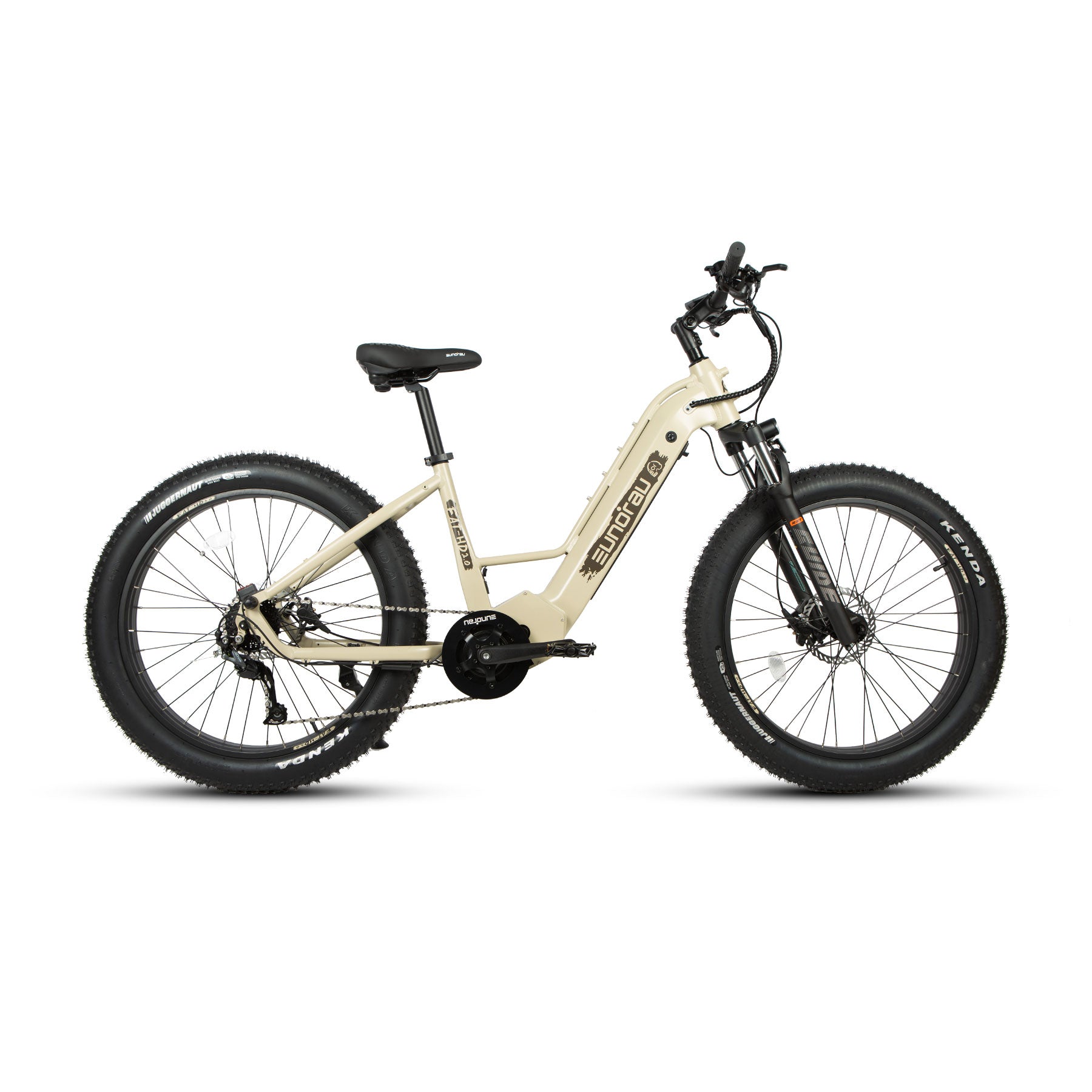
Nothing about that is unusual in this category: high torque is what lets a loaded bike pull a trailer through mud or climb a ridge without the rider walking. The practical consequence is that “hunting eBike” and “low-speed electric bicycle” are not automatically the same legal object — the answer follows the wattage, not the marketing.
Check the motor label first
Before you read another state guide, find these four fields on your own bike. They decide which rules you are shopping for.
| Attribute | Where it is printed | What it decides |
|---|---|---|
| Motor wattage | Motor housing label, spec sheet, display menu | Whether the bike is a low-speed electric bicycle at all |
| Top assist speed | Spec sheet, controller settings, speedometer | Class 1/2/3 placement, and whether the law caps you at 20 or 28 mph |
| Throttle presence | Handlebar and spec sheet | Class 2 versus Class 1; some land managers allow pedal-assist only |
| Speedometer | Display unit | Required equipment on Class 3 bikes in three-class states |
03Can You Ride It Where You Hunt?
Even a bike with no license requirement can be off limits on the ground you hunt, because land managers write their own access rules. Wildlife management areas, state forests and federal lands each decide which class may ride, and the class an agency names is the one that counts: Arkansas allows Class I where a traditional bicycle may ride, while Washington routes all three classes onto motorized trails and forest roads.
The Arkansas Game & Fish Commission approved Class I eBikes on the WMAs it owns, anywhere a traditional bicycle may be ridden — and stated in the same decision that other electric bicycles are subject to the same restrictions as motorized vehicles. The rule covers the 61 WMAs the Commission owns and not the 78 it manages cooperatively with other owners, which is exactly the kind of boundary that riders should confirm with the local office before the season starts.
Agencies increasingly publish e-bikes policies inside the same rule book as motorized use, and some require a written decision before eBikes may use a route signed for bicycles. Federal ground follows the same logic. The Bureau of Land Management’s e-bike rule amends 43 CFR 8340.0-5 to define eBikes as bikes of no more than 750 watts limited to Classes 1, 2 and 3, and to keep compliant eBikes out of the off-road vehicle definition. They are allowed on roads and trails open to off-highway vehicles; on routes signed for bicycles and non-motorized travel, a manager has to issue a written decision before eBike use is authorised. Washington State’s agencies show the mirror image: the Department of Fish & Wildlife describes eBikes as machines up to 750 watts in one of three classes, and the Department of Natural Resources currently allows Classes 1, 2 and 3 only on motorized trails and forest roads open to motorized public use.
| Where you ride | Who sets the rule | What to check before opening day |
|---|---|---|
| Private land with owner permission | Landowner | Permission scope — most vehicle-code questions do not arise here |
| State wildlife management area | State wildlife agency | Whether only Class I is allowed, and whether the area is agency-owned or cooperatively managed |
| State forest or state park | State lands agency | Motorized-trail versus non-motorized-trail designation |
| Federal land (BLM, Forest Service) | Federal land manager | Route designation, and any written decision authorising eBikes on non-motorized routes |
04The Four-Step Legality Check
Run these four checks in order and you will have a defensible answer for your own bike and your own ground — without needing a lawyer to read a state statute for you.
Two more fields belong on that checklist: registration and insurance requirements, which follow the class the vehicle lands in, and licensing requirements for moped-class machines, which surface only once a vehicle crosses the power and speed limits. Helmet rules are set locally, and where a route runs along shared-use paths or a paved trail with pedestrians, agencies often apply the stricter reading of the class limits.
One clarification worth keeping straight: a licensing rule and an access rule answer different questions. A machine can sit in a licensed category while the land manager still bars motorised vehicles, or be allowed on a trail that the vehicle code regulates separately. Clearing both levels is what keeps a hunt day from ending at a gate.
05Matching Bike Class to Hunting Use
If you want the fewest moving legal parts, ride a compliant bike on ground that permits it. If your hunting depends on torque, climbing ability and towing a loaded trailer, you are shopping in the 1000-watt group — and the sensible move is to decide first whether you will ride public roads, and second where you will park the truck and ride.
Most of the confusion disappears when bike and terrain are chosen together: a gravel road network open to motorized use is a different proposition from a walk-in-only WMA, and the machine that suits the first may not be allowed on the second regardless of its licence status. Hunters who ride motorized forest roads get the most use from a mid-drive machine with the torque to stay moving under load.

48V 1000W Bafang G510/M620 mid motor, torque sensor, 160 N·m. Built for steep, loaded climbs.
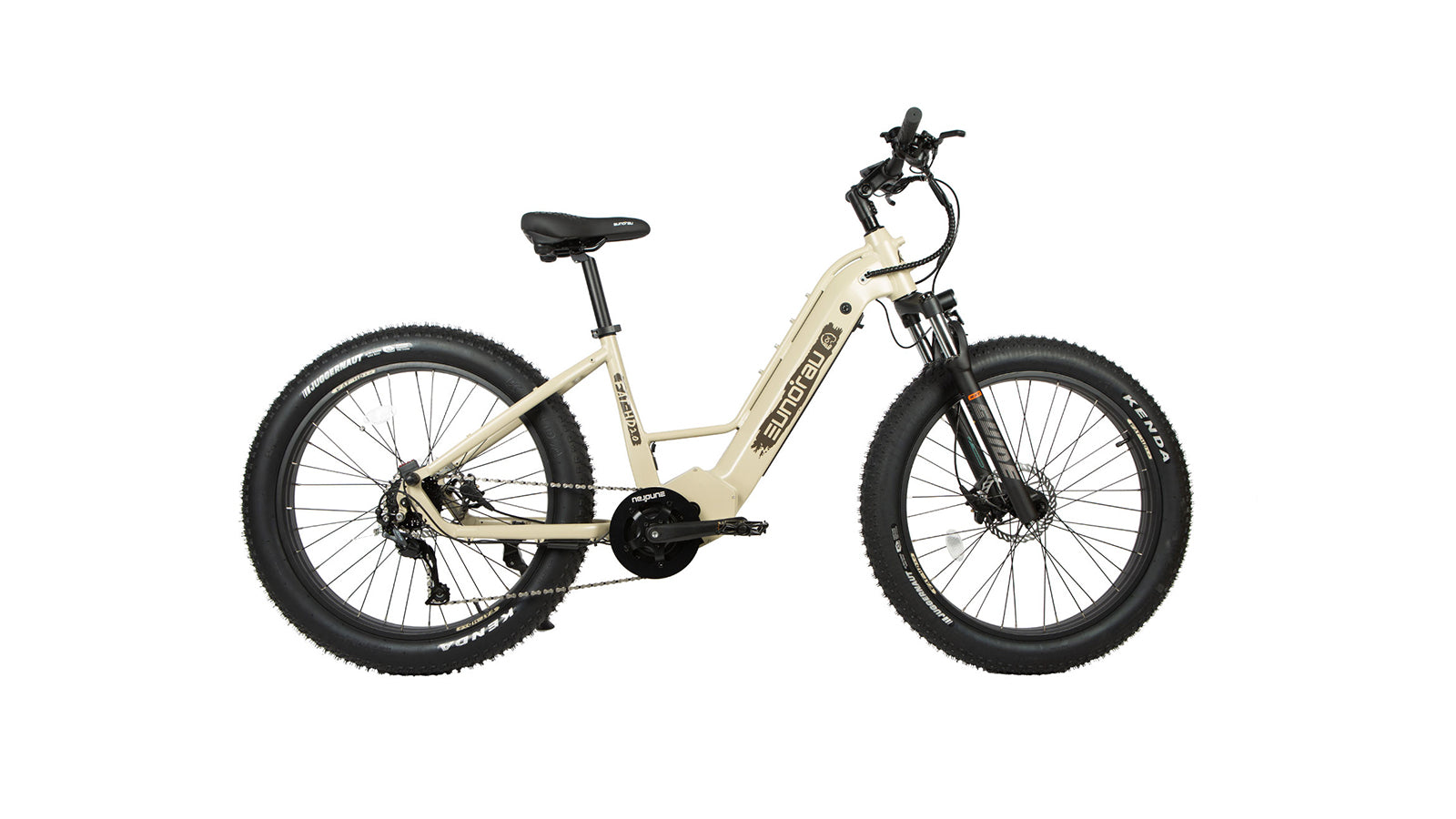
48V 1000W Bafang mid motor, 160 N·m, listed range up to 80 miles with a secondary battery.
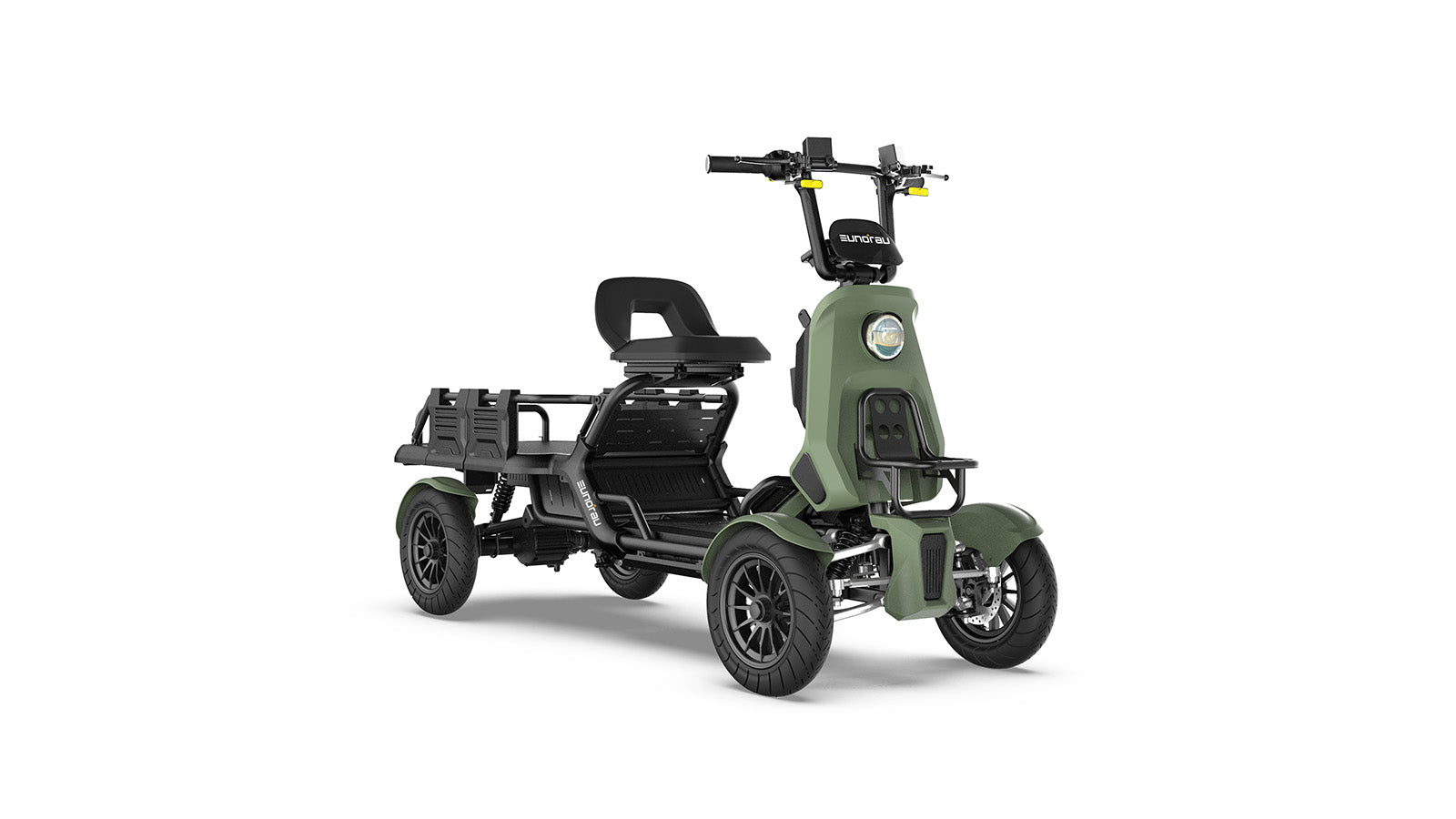
1000W motor on a 48V 27Ah battery, described for varied terrain and utility loads.
Whichever direction you go, the pre-purchase reading list is short: our Class 1 eBike for hunting page for the compliant end of the range, the off-road hunting eBike page for the higher-torque machines, and the range guide for what a loaded bike actually covers. If you want the whole catalogue in one view, start at our hunting eBike collection.
06Frequently Asked Questions
Do you need a license for an eBike in every state?
No single answer covers the whole country. In states that use the three-class system, a compliant low-speed electric bicycle — under the 750-watt mark, motor-only under 20 mph — is regulated as a bicycle, so no driver’s license, plate or registration applies. Jurisdictions set their own thresholds, and vehicles above them can land in moped or motorcycle categories, where licensing and age rules do apply. Check your state DMV for the version that governs you.
Are hunting eBikes street legal?
It depends on the machine and the jurisdiction. A hunting eBike that meets the 750-watt, 20 mph federal definition and carries the right class label can be ridden where bicycles are allowed. The hunting eBikes in our own catalogue are sold above that line, and a state can categorise a vehicle at that output as a moped or motorcycle — California’s Attorney General states that vehicles over 28 mph pedal assist or 20 mph throttle are mopeds or motorcycles there. Confirm the classification before riding on public roads: New York City’s chart is one illustration, since its moped classes need a plate and DMV registration.
Can you ride an eBike on a wildlife management area?
Only if the managing agency allows it. Arkansas allows Class I eBikes on the WMAs it owns wherever a traditional bicycle may ride, and applies motorized-vehicle restrictions to other electric bicycles; Washington’s natural resources agency permits Classes 1, 2 and 3 only on motorized trails and forest roads open to motorized use. Rules for cooperatively managed areas can differ from agency-owned land, so confirm the specific unit.
- 15 U.S.C. § 2085 — definition of a low-speed electric bicycle (the 750-watt and 20 mph test). law.cornell.edu/uscode/text/15/2085, checked 14 September 2026.
- NYC Department of Transportation — Electric Bicycles & More: licensing, plate and registration table by class. nyc.gov/html/dot/html/bicyclists/ebikes.shtml, checked 14 September 2026.
- California Attorney General — consumer alert on eBike speed and power limits (vehicles over the limits are mopeds or motorcycles). oag.ca.gov, checked 14 September 2026.
- Arkansas Game & Fish Commission — Class I electric bicycles approved for use on agency-owned WMAs, 18 June 2020. agfc.com.
- Bureau of Land Management — eBike rule and FAQ (43 CFR 8340.0-5; eBikes excluded from the off-road vehicle definition). blm.gov/programs/recreation/e-bikes/faq, checked 14 September 2026.
- Washington Department of Fish & Wildlife — electric-assisted bicycles on WDFW-managed lands (750-watt cap, three classes). wdfw.wa.gov, checked 14 September 2026.
- Washington Department of Natural Resources — eBike rules and regulations (Classes 1, 2 and 3 on motorized trails and forest roads open to motorized use). dnr.wa.gov, checked 14 September 2026.
- Model specifications quoted in this article (SPECTER-S 3.0 / Hunter X9, FAT-HD 2.0 / Hunter X7, S1000 Utility Vehicle) come from the product pages on hunterbike.store.
- Limits of this review: eBike laws change, and this article walks through the federal definition plus the agency positions cited above rather than re-verifying every statute — Alabama, Florida and New Jersey among them. Rules for a particular machine are [A VERIFIER] and should be confirmed with the agency or land manager before you ride.


