
Hunting eBike Reviews: How to Judge Range, Payload and Build
Most hunting e-bike reviews repeat the same three numbers: miles of range, pounds of payload, watts of motor. Those numbers mean different things depending on the spec sheet — and a review that does not tell you which configuration produced them is not a review, it is a headline.
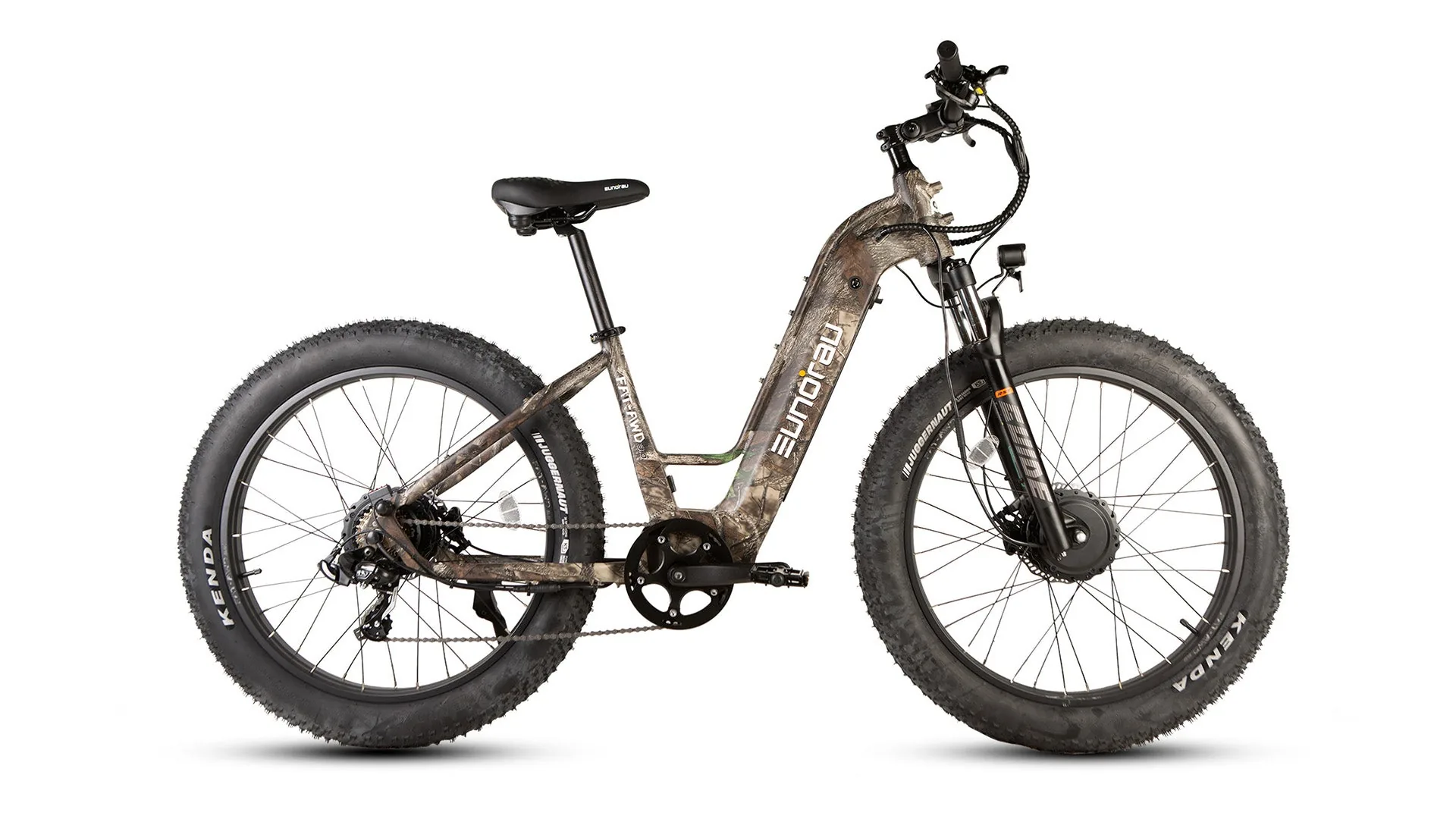
A hunting ebike review is only usable if it states the three specs that decide the ride: the battery configuration behind the range figure (the main battery alone or with a second unit), the total payload capacity in pounds, and whether the motor sits at the cranks or in the wheel. Check those three against the model’s own spec sheet before you trust any other sentence in the review.
01What should a hunting e-bike review actually prove?
A hunting eBike review should prove three things and skip the rest: how far the bike actually goes under hunting load, how much weight it carries with the rider on it, and what kind of motor does the work. Everything else — colour, display, app, decals — is preference, not proof.
It is a narrow bar. The six competing pages analysed for this guide are written as model-by-model roundups, and the comparison tables below are built from published first-party specifications instead, so the reader is not asked to compare a range figure, a motor wattage and a price that were produced under three different conditions.
The fix is to read reviews the way a spec sheet is read. Each claim in a review has a counterpart on the product page, and the counterpart is the one a warranty and a return policy are attached to. When the two disagree, the spec sheet wins — not because brands are more honest than reviewers, but because the spec sheet is the document the bike is sold with.
Two of these four criteria are mechanical and easy to verify. Range is the hard one, because a range figure is a result, not a component — it is what happens when a battery capacity meets a rider, a load, a grade, a temperature and an assist level. A review can be perfectly honest about a range number and still mislead you, if it leaves out the configuration that produced it.
- Three specs decide a hunting e-bike purchase: battery configuration, total payload capacity, motor type.
- A range figure without its battery configuration is not comparable to another range figure.
- Published N·m and motor placement explain climbing behaviour better than wattage alone.
- Any review that omits payload capacity in pounds is guessing on your behalf.
How we checked the numbers in this guide
Every specification below is taken from a published model page on this site, read on 15 September 2026, and every computed value is labelled as computed. Where a model page is silent, this guide says so instead of filling the gap.
02Why do range numbers in hunting e-bike reviews disagree?
Range figures disagree, in part, because the energy setup behind them is often left out — and on a dual-battery machine, running one battery or two is not a rounding error.
The mechanism is arithmetic. A battery’s energy content is its voltage multiplied by its amp-hour rating, which gives watt-hours. A 48V 15Ah unit carries 720Wh. A 48V 17.5Ah unit carries 840Wh. Add a second 15Ah unit and you add another 720Wh. The machine is not more efficient; it simply carries more energy. A published figure that assumes a second unit is therefore not comparable with one collected on the main battery alone.
Here is what that looks like across the models listed on this site, with the energy setup each published figure assumes.
| Model | Published range | Energy setup the figure assumes | Motor |
|---|---|---|---|
| Eunorau FAT-AWD 3.0 | 80 miles | 48V 15Ah Samsung/LG battery plus optional second 15Ah unit | Dual wheel motors, 500W each, 110 N·m |
| Eunorau Specter S 3.0 Hunter X9 | 80 miles | 48V 17.5Ah Samsung battery plus second 15Ah unit | Crank-mounted 1000W, 160 N·m, pedal-force sensor |
| Eunorau Specter ST 2.0 | 80 miles | 48V 17.5Ah Samsung battery plus second 17Ah unit | Crank-mounted 1000W, 160 N·m, pedal-force sensor |
| Eunorau FAT-HD 1.0 Pro Hunter X7 | 60 miles | Single 48V 25Ah unit | Crank-mounted 1000W, 160 N·m |
| Eunorau FLASH AWD 1.0 | 220 miles | 52V 16Ah plus 21Ah second and 17Ah third unit | Dual 750W, 184 N·m |
| Eunorau E-FAT-MN | 40–50 miles | Single 48V 13Ah unit | Wheel motor 500W, 80 N·m |
Total energy on board, in watt-hours
Voltage times amp-hours gives watt-hours, the one figure that lets you compare two setups honestly. It is arithmetic on published specifications, not a discharge test result, and it makes the difference visible at a glance.
| Model | Main unit | Second or third unit | Total energy published |
|---|---|---|---|
| Eunorau E-FAT-MN | 48V 13Ah (624Wh) | None | 624Wh |
| Eunorau FAT-AWD 3.0 | 48V 15Ah (720Wh) | Optional 15Ah (720Wh) | 720Wh, or 1,440Wh with the second unit |
| Eunorau Specter S 3.0 Hunter X9 | 48V 17.5Ah (840Wh) | Second 15Ah (720Wh) | 1,560Wh |
| Eunorau Specter ST 2.0 | 48V 17.5Ah (840Wh) | Second 17Ah (816Wh) | 1,656Wh |
| Eunorau FAT-HD 1.0 Pro Hunter X7 | 48V 25Ah (1,200Wh) | None published | 1,200Wh |
| Eunorau FLASH AWD 1.0 | 52V 16Ah (832Wh) | 21Ah (1,092Wh) and 17Ah (884Wh) | 2,808Wh across three units |
Two things follow from the column on the right. First, a bike advertising 80 miles may carry 720Wh or 1,656Wh depending on whether the second unit is fitted — the same headline over very different energy. Second, the figures in the table run from 40–50 miles on a single 13Ah unit to 220 miles on a three-unit setup, so the headline range and the motor rating do not move together.
Two more variables move a published figure, and both are worth checking before you accept one.
- Assist level and throttle use. A pedal-force sensor meters power to your input; a thumb throttle delivers full power on demand. The same energy store lasts differently on the same trail depending on how the rider uses the two.
- Temperature and terrain. Cold reduces usable energy in lithium-ion cells, and loose or steep ground raises the effort needed for a given distance. A figure collected on a mild day on maintained fire roads does not transfer to a loaded climb in snow.
Range claims are not the problem here; an incomplete measurement is. A figure quoted without its energy setup cannot be compared with another figure, and those two numbers are exactly what a buyer is asked to choose between. When a review quotes a range and skips the setup, read it as a ceiling in ideal conditions, not as a plan for a loaded hunt.
03Does the payload rating cover you, your gear and the game?
The published payload rating covers you, your gear and the game only if you add the three together first. That rating is a single number per model — 375 lbs on the Eunorau FAT-AWD 3.0, 330 lbs on the E-FAT-MN — and it has to absorb the rider, not just the cargo.
This is where a review’s language drifts from the spec sheet. “Hauls a deer” is a real-world statement with no number in it. A spec sheet cannot tell you whether that holds up for your own frame and your terrain; it can only give you the ceiling. Working the arithmetic yourself takes about thirty seconds and removes the guesswork.
| Worked example (assumed inputs, not measured) | Load | Running total |
|---|---|---|
| Rider in gear, boots and daypack (assumed) | 190 lbs | 190 lbs |
| Bow, stand or blind, water, tools, pack | 40 lbs | 230 lbs |
| Load hauled out in one trip | 100 lbs | 330 lbs |
| Margin against a 375 lb rated machine | — | 45 lbs |
| Margin against a 330 lb rated machine | — | 0 lbs |
If you’re comparing two reviews side by side, this is the column to look for. The point is not the number at the bottom, it is the margin. A 330 lb machine and a 375 lb machine are 45 lbs apart, and one honest change — a heavier rider, a second trip’s worth of gear, a wet load — eats that difference. Hunters who buy at the ceiling usually find out how little headroom they have on the first loaded climb, when the motor is also working hardest.
Of the models listed on this site, the published payload rating is 375 lbs on the FAT-AWD 3.0 and 330 lbs on the E-FAT-MN. Where a model page does not publish one, this guide does not assign it.
Two numbers appear on hunting e-bike pages and they are not interchangeable. The payload rating is the all-in figure for the machine; a rack rating is the figure for the rack hardware and its mounting points. If you plan to carry a load on a rear rack, or to tow a hunting trailer, check both — a 375 lb rating does not by itself tell you what the rack mounts will handle, and a loaded trailer adds tongue load rather than removing it.
Water is the input most riders underestimate. Build your total from every item you actually carry — hydration, a spare battery, a tool kit, the pack on your back — rather than from rider plus game alone. Weigh your gear once, before you choose a model, and you avoid the common outcome of a machine that climbs well empty and struggles on the first loaded trip.
The all-in ceiling: rider, clothing, daypack, accessories and anything hauled. Published per model, in pounds. Compare it against a total you build yourself.
A different figure that applies to the rack itself. A high payload rating does not automatically mean the rack carries your load; check both if you plan to strap a load to the rear.
04Motor layout: what changes on the trail?
A mid-drive motor sits at the cranks and drives the rear wheel through the gears; a hub motor sits in the wheel and drives it directly. The crank-mounted layout multiplies its pulling force through a low gear on a climb, so a mid-drive with a pedal-force sensor tends to feel stronger on steep, loose ground — wheel motors keep working if the transmission is damaged, and they are simpler to live with.
Reviewers often argue this one as a preference. It is closer to a mechanical distinction, and the spec sheets make it concrete because they publish torque in newton-metres alongside the layout.
| Model | Motor layout | Published torque | What the configuration implies |
|---|---|---|---|
| Eunorau Specter S 3.0 Hunter X9 | Crank-mounted, pedal-force sensor | 160 N·m | Power metered to pedal input; gearing multiplies force on climbs |
| Eunorau Specter ST 2.0 | Crank-mounted, pedal-force sensor | 160 N·m | Same layout in a step-through frame |
| Eunorau FAT-HD 1.0 Pro Hunter X7 | Crank-mounted | 160 N·m | Fat tire plus crank-mounted motor, single 48V 25Ah unit |
| Eunorau FLASH AWD 1.0 | Dual wheel motors, all-wheel traction | 184 N·m | Two driven wheels; grip split between front and rear |
| Eunorau FAT-AWD 3.0 | Dual wheel motors, all-wheel traction | 110 N·m | Front and rear 500W motors dig in on mud, sand and loose ground |
| Eunorau E-FAT-MN | Single wheel motor | 80 N·m | Simplest transmission; 63.9 lb published total weight |
Two practical consequences follow, and neither is visible from a headline range figure.
First, a torque figure on its own tells you little without the layout, because the two configurations deliver it differently. Second, all-wheel traction changes which wheel is being asked to find grip — on loose climbs and in snow, that is often the difference between steady progress and a spinning rear tire, which is why a dual-motor machine with a lower figure can outperform a single-drive bike with a higher one on the right surface.
Fat tires and suspension belong in the same conversation. A 26 x 4.0 inches footprint is what lets a hunting bike cross mud and loose rock without losing its line, and a suspension fork keeps the front wheel planted instead of skittering — two things a review feels on the trail and a spec sheet states as numbers. On a mountain route with roots and rock, a stable platform and a smooth power delivery matter more than a higher top figure.
Motor at the cranks, power metered to pedal input, force multiplied through the cassette. Check: published N·m, gear range, and whether the sensor reads pedal force or cadence.
Two motors, two driven wheels, independent of the transmission. Check: output per motor, front and rear wattage, and the payload rating for the extra hardware.
05How to tell a spec-backed review from a sponsored listicle
A spec-backed review names configurations, numbers and conditions; a sponsored listicle names a winner. The single fastest check is whether the review tells you the battery setup behind its range claim — a writer who actually rode the bike tends to know, and a writer assembling a roundup tends not to.
There is also a legal layer worth knowing about, because it is the one part of this you can verify from the outside. In the United States, the Federal Trade Commission’s Endorsement Guides in 16 CFR Part 255 require disclosures when a reviewer has a material connection to the seller — payment, free product, or a commission on the link you click. The plain-language rule: if the relationship would change how much you trust the review, it has to be disclosed clearly, not buried in a footer.
Run these six checks before you let a review influence a purchase.
- Does it state the battery configuration behind the range? Capacity in Ah and voltage, and whether a second battery was fitted.
- Does it give total payload capacity in pounds? If the review says “heavy-duty” but the spec sheet has a number, the number is the claim.
- Does it name the motor layout and the assist modes? Mid-drive or hub, the assist modes it tested in, and N·m if it discusses climbing.
- Does it name the surface and the load? A figure collected empty on a fire road says nothing about a loaded climb.
- Does it disclose its relationship to the seller? Look for an affiliate note or a sponsorship line, per 16 CFR Part 255.
- Does it link to the spec sheet? A review confident in its numbers tends to point at the document those numbers came from. If you’re looking at a page that links nothing, you are reading an opinion.
Keep a screenshot of the spec sheet fields you care about before you buy: published range and the configuration behind it, the payload rating, motor layout and output, total weight, tire size, brake rotor specification, and the class and speed limit. A machine with a standard 20 mph limit from a US retailer is the baseline here, not a marketing claim. Those are the fields a review can contradict and a warranty can enforce. If a review disagrees with any of them, the review is the one that is wrong — or the model has been revised, which is worth an email to the seller before you order.
One more signal is worth reading honestly, and it cuts both ways: volume is not quality, and the most expensive mistake is treating a page count as proof. A review is a great place to learn how a machine feels loaded and how it handles a specific surface. On this site, product pages display a customer review count, and several of the models listed show none yet — because a review section that only fills when a buyer writes one is more useful to you than a wall of anonymous praise. A review page with two hundred five-star entries for a bike released months ago is telling you something about the page, not the bike.
When a spec sheet and a review disagree, the spec sheet is what the bike ships with. When two spec sheets disagree on range, compare configurations. Reviews that don’t state the energy setup cannot be compared with reviews that do, and a review that offers no configuration at all has given you nothing to compare.
06What a review cannot tell you: class, land access and fit
A review cannot tell you whether the bike is legal where you plan to ride, and it usually cannot tell you whether it fits — those are class, land access and geometry questions, and each has a document behind it.
Start with class. Under United States federal law, a “low-speed electric bicycle” is defined as a two- or three-wheeled vehicle with fully operable pedals, an electric motor of less than 750 watts, and a top speed on motor power of no more than 20 mph — the definition in 16 CFR Part 1512. Models in this catalogue that publish a maximum speed list 20 mph. Class labelling and where each class may be ridden are set by state law and by the land manager, and they vary; a review is not the place to settle that question.
Then land access. Federal land managers publish their own rules for eBikes on trails, and the Bureau of Land Management limits e-bike use on its lands to Class 1, 2 and 3 machines and gives local managers the authority to decide which non-motorised trails may be used by them. If a review tells you “you can ride this anywhere”, it is describing neither the bike nor the law — check the land manager’s page for the route you actually use, and your state wildlife agency for hunting-specific rules on that parcel.
Finally, fit. These are heavy e-bikes, and a review that never mentions weight is skipping something you will feel every time you lift the bike over a blowdown or into a truck bed. Two of the models listed publish a total weight: 63.9 lb on the E-FAT-MN and 79.4 lb on the FAT-AWD 3.0.
| What to check | Where it is written down | What a review usually says instead |
|---|---|---|
| Motor class and speed limit | 16 CFR Part 1512 definition; state law; land manager rules | “Plenty fast” |
| Assist modes and power delivery | Published controller and sensor specification | “Smooth and natural” |
| Trail and land access | BLM and forest manager eBike pages; state wildlife agency | “Ride anywhere” |
| Weight | Published total weight per model | Not mentioned |
| Tyre and brakes | Published tire size and brake rotor specification | “Grippy tires, strong brakes” |
| Mounting hardware compatibility | Trailer hitch adapters and rack specifications | Not mentioned |
Nothing here is specific to hunting machines: the same discipline applies to the electric utility vehicles and to the parts and accessories in this catalogue, where the published figure is the one that ships. The pattern in the right-hand column is the whole argument of this guide. A review is useful for the questions it cannot answer from a page: how the bike feels loaded, how it handles a specific surface, whether the assist behaviour suits the way you ride. It is unreliable for the questions that already have a documented answer — capacity, range configuration, motor type, class, weight.

- Dual 500W hub motors, 110 N·m
- 375 lb total payload capacity
- 80 miles with second 15Ah battery
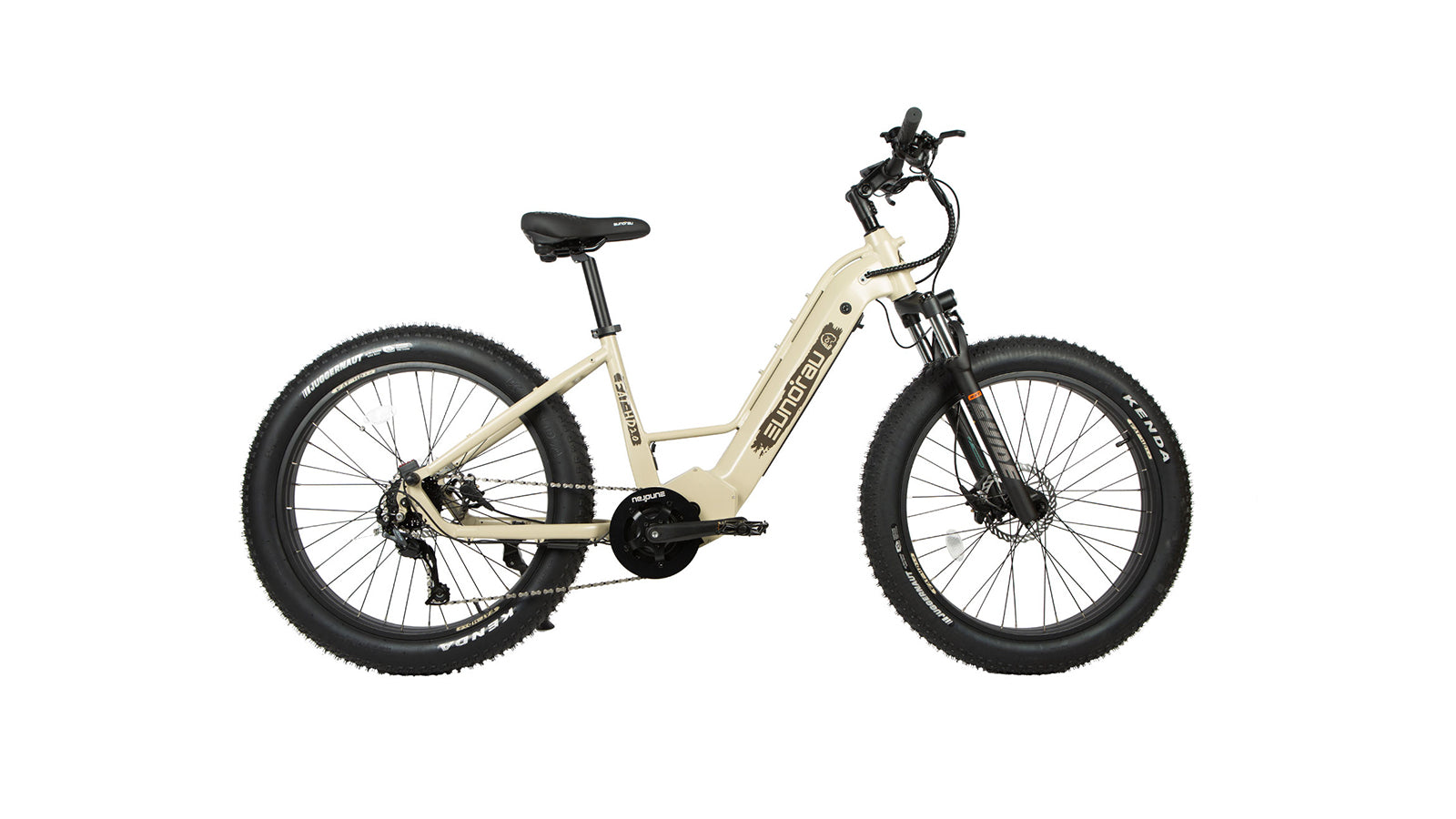
- Mid-drive 1000W Bafang, 160 N·m
- 48V 15Ah Samsung cells
- Up to 80 miles with second battery

- Mid-drive 1000W, 160 N·m, pedal-force sensor
- 48V 17.5Ah plus second 15Ah battery
- 26 inch Kenda fat tires
07Frequently asked questions
How do I choose between hunting e-bike models?
There is no single answer, because the three specs that decide it pull in different directions: battery configuration, total payload capacity, and motor type. A rider hauling heavy loads wants the highest published payload capacity; a rider on steep, loose ground wants mid-drive with a torque sensor. Compare configurations, not headlines.
How far can a hunting e-bike really go?
It depends on the energy setup and on your load and terrain. Published figures on the models listed here run from 40–50 miles on a single 48V 13Ah unit to a 220-mile three-battery 52V setup, with 80 on the dual-battery models. Always check whether the quoted figure assumes a second unit.
Do you need a license to ride a hunting e-bike?
United States federal law defines a low-speed electric bicycle as having pedals, a motor under 750 watts, and a 20 mph motor-powered top speed. State law and land manager rules then decide where each class may be ridden. Models in this catalogue that publish a maximum speed list 20 mph, with fully operable pedals.
How much load can a hunting e-bike carry?
The payload rating is published per model and includes the rider. On the models listed here it is 375 lb on the Eunorau FAT-AWD 3.0 and 330 lb on the E-FAT-MN. Add your own figure, gear and intended load, and keep a margin for the climb home.
Is a cranks-mounted motor better than a wheel motor for hunting?
A crank-mounted motor drives through the gears and meters power to pedal input, which helps on steep, loose ground; dual wheel motors put power at both wheels and are independent of the transmission. Published figures on the models listed here range from 80 N·m on a single wheel motor to 184 N·m on a dual-motor setup.
- 16 CFR Part 1512 — requirements for low-speed electric bicycles, Electronic Code of Federal Regulations. ecfr.gov (consulted 15 September 2026).
- 16 CFR Part 255 — FTC Guides Concerning the Use of Endorsements and Testimonials in Advertising, Electronic Code of Federal Regulations. ecfr.gov (consulted 15 September 2026).
- Bureau of Land Management — eBike access and class rules on BLM-managed lands. blm.gov (consulted 15 September 2026).
- Published model specifications, Hunter Bike catalogue — Eunorau FAT-AWD 3.0, FAT-HD 2.0 Hunter X7, FAT-HD 1.0 Pro Hunter X7, Specter S 3.0 Hunter X9, Specter ST 2.0, FLASH AWD 1.0, E-FAT-MN, Defender (read 15 September 2026).
- Disclosed limitation — the range figures quoted in this guide are the values published by the manufacturer on each model page; they are not independent discharge measurements. An independent discharge test would need to be added when one becomes available. [A VERIFIER]


