
eBike for Elk Hunting: Range, Payload and Terrain
A bull elk yields 218 lbs of meat once it’s down. Getting that weight, plus your gear and your own body, back to the truck is the real test of a hunting eBike — not the number on the spec sheet.
- What Makes an eBike Right for Elk Hunting?
- How Much Weight Are You Really Packing Out?
- Range and Elevation: What Backcountry Elk Country Actually Demands
- Payload Capacity Compared: 4 HunterBike Models for Elk Country
- Adding a Hunting Trailer for Multi-Trip Pack-Outs
- Which Model Fits Your Elk Hunt?
- FAQ: eBikes for Elk Hunting
What Makes an eBike Right for Elk Hunting?
An elk-ready eBike comes down to three numbers, in this order: total payload capacity, real-world range, and motor torque. A bike that can’t carry the meat back to the trailhead doesn’t matter how fast it climbs going in.
Most “hunting eBike” listings lead with watts and top speed. For elk, that’s the wrong first filter — elk country means multi-mile access, several thousand feet of elevation change, and a return trip that includes the animal. HunterBike states its own screening rule for this: the store doesn’t sell bikes “that max out at 200 lbs when the hunter plus gear is 280.” That’s HunterBike’s stated policy, not an industry-wide fact — verify payload numbers against your own bodyweight and gear before buying anywhere.
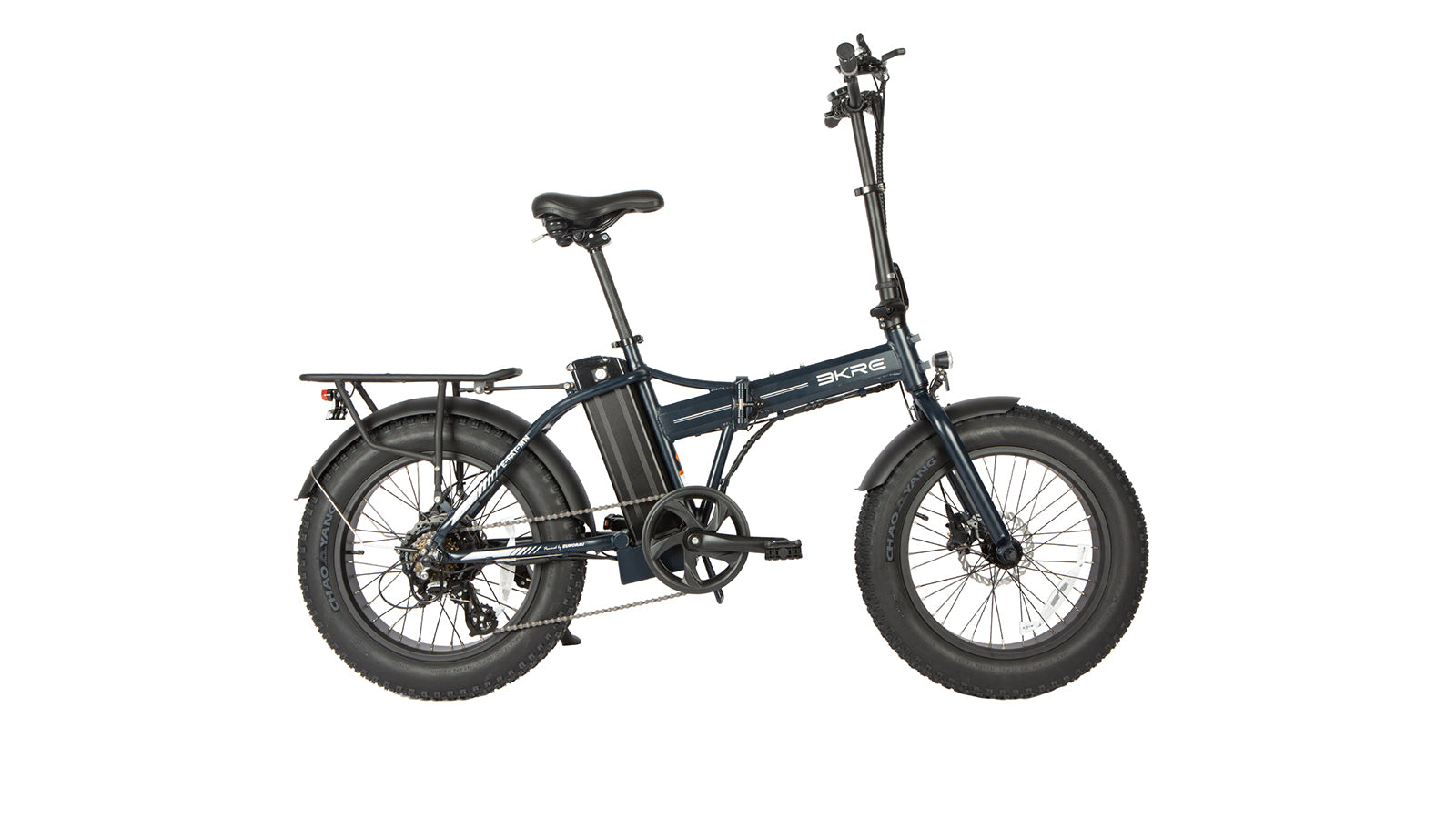
Every model below is a full electric hunting bike, not a converted pedal bike. The FAT-AWD 3.0, for one, pairs 26 x 4.0 fat tires with 180mm hydraulic disc brakes front and rear, pedal assist plus a thumb throttle, a governed 20 mph top speed, and a 5–7 hour charge time on its stock battery. The DEFENDER’s front suspension fork helps its front tire handle rough, off-road climbs; its hub-motor siblings ride stiffer over the same ground. None of that changes the core performance question for elk country: can the frame carry the load, and does the battery cover the distance without leaving you stranded a mile from the truck with game on your back.
How Much Weight Are You Really Packing Out?
| Live weight | Meat yield | |
|---|---|---|
| Bull elk | 700 lbs (RMEF Elk Facts, Jun. 2025) | 218 lbs (Univ. of Wyoming study via RMEF, 2019) |
| Cow elk | 500 lbs (RMEF Elk Facts, Jun. 2025) | 169 lbs (Univ. of Wyoming study via RMEF, 2019) |
Inference, not a manufacturer claim: a 218-lb meat load alone can eat up more than half of a 375-lb-rated payload capacity before the rider’s own weight and pack are added. That’s the math to run before comparing torque or top speed. Sources: RMEF Elk Facts and RMEF, citing a University of Wyoming study, both re-checked July 2026.
Range and Elevation: What Backcountry Elk Country Actually Demands
Manufacturer-published figures, HunterBike product pages, re-checked July 2026. Not independently road-tested.
Idea worth correcting: assuming the top range figure on a product page is what you’ll get on your hunt. It’s a flat-ground rating. Map your one-way access distance, double it for the round trip, then compare against the rated range for the exact battery configuration you’re ordering — a single-battery bike and its dual-battery version are not the same range on paper or in the field.
Payload Capacity Compared: 4 HunterBike Models for Elk Country
| Model | Total payload | Range | Motor / torque | Price |
|---|---|---|---|---|
| FAT-AWD 3.0 | 375 lbs | 80 mi (secondary battery) | Dual 500W hub, 110 Nm combined | $1,699–$2,199 |
| FLASH AWD 1.0 | [À VÉRIFIER — not published] | 220 mi (3 batteries) | Dual 750W, 184 Nm | $2,099 |
| E-FAT-MN | 330 lbs | 40–50 mi | Single 500W hub, 80 Nm | $1,099 |
| DEFENDER | [À VÉRIFIER — not published] | 40 mi | Single 500W rear hub, 60 Nm | $1,599 |
The FAT-AWD 3.0 and FLASH AWD 1.0 solve two different problems, not a better-vs-worse spread. FAT-AWD 3.0 runs a powerful dual 500W hub motor setup (110 Nm combined) rated for 375 lbs of total payload, the highest published figure here, with an 80-mile range once the secondary battery is installed — built for one heavy pack-out over a moderate distance.
FLASH AWD 1.0 runs a dual 750W motor set (184 Nm combined) and is built around range instead: 220 miles across three batteries, for multi-day access rather than a single heavy haul. Its total payload capacity isn’t published on the product page — mark that figure [À VÉRIFIER] until confirmed directly.



Adding a Hunting Trailer for Multi-Trip Pack-Outs
Not compatible: URUS, SPECTER-S, SPECTER-ST, FAT-HS, FAT-HD, FAT-AWD
Source: EUNORAU Hunting Trailer 2 Wheels product page, hunterbike.store, re-checked July 2026.
Beyond the hitch pattern, a few small components decide whether the trailer actually tracks straight over rough ground rather than fighting you: a steel frame, 20 x 3-inch fat-tire wheels, and its own built-in suspension. It weighs 27.8 lbs empty, on top of whatever it’s hauling. None of that shows up in a spec-sheet accessories list unless you go looking for it.
Idea worth correcting: assuming any hitch-mount trailer bolts to any hunting eBike. It doesn’t — this trailer uses a specific connector and thru-axle pattern, which is why it pairs with the FLASH AWD 1.0 and DEFENDER but not the FAT-AWD line above. If the extra 200 lbs matters for your pack-out plan, that compatibility list should decide which frame delivers the most value for your trip, not the other way around.
Which Model Fits Your Elk Hunt?
| Scenario | Recommended model | Why |
|---|---|---|
| Single-day hunt, heaviest expected pack-out | FAT-AWD 3.0 | Highest published payload capacity (375 lbs) here |
| Multi-day backcountry camp, long access road, trailer wanted | FLASH AWD 1.0 | 220-mi range, trailer-hitch compatible |
| Shorter access point, tighter budget | E-FAT-MN | $1,099 entry price, 330 lbs payload |
| Entry price with trailer compatibility | DEFENDER | $1,599, accepts the hitch-mount trailer |
This isn’t the right purchase for every hunter. If your access is foot-and-horse only or motorized use isn’t allowed on the specific trail, none of the above changes that — e-bike class rules vary by state and land manager, so confirm the regulation for your property before ordering [À VÉRIFIER — check locally]. And if your pack-out is consistently under 200 lbs on trails you already know, a lower-capacity, lower-price frame is the better buy — extra payload capacity you don’t need just adds weight and cost.
None of the numbers above replace a direct conversation about your terrain and typical harvest weight. HunterBike’s contact page connects you to someone who will run that math with you before you order, not after.
FAQ: eBikes for Elk Hunting
- How much payload capacity do I need for elk hunting?
- Start with your bodyweight plus a loaded pack, then add the meat weight you’re planning for — a bull elk yields 218 lbs and a cow 169 lbs, per a University of Wyoming study cited by RMEF (2019). Compare that total against a bike’s rated total payload capacity, not just a headline “load capacity” number.
- Does the manufacturer’s range number reflect real backcountry riding?
- No. Published range is typically measured on flat ground at moderate speed. Elevation gain, cold, cargo weight, and stop-and-go riding all reduce real-world range below the rated figure.
- Can I attach a hunting trailer to any HunterBike model?
- No. HunterBike’s 2-wheel hunting trailer (200-lb capacity) fits the DEFENDER, DEFENDER-S, Flash AWD, and G30-CARGO hitch pattern. It’s not compatible with the FAT-HS, FAT-HD, SPECTER-S, SPECTER-ST, or FAT-AWD frames.
- Mid-drive or hub motor for elk country?
- Both appear in HunterBike’s lineup. Mid-drive motors route power through the drivetrain, which can help on steep, technical climbs. Dual hub-motor AWD setups, like the FAT-AWD 3.0’s 110 Nm combined output, spread traction across both wheels on loose or uneven ground. Terrain and load should decide, not one layout being universally better.
- Are hunting eBikes legal on public land?
- It depends on the state, land manager, trail, and the bike’s e-bike class. Check state e-bike regulations and the property’s own rules before riding [À VÉRIFIER — confirm locally].
- What’s the price difference between the FAT-AWD 3.0 and the FLASH AWD 1.0, and why?
- FAT-AWD 3.0 runs $1,699–$2,199 and FLASH AWD 1.0 runs $2,099. The gap reflects different priorities: FAT-AWD 3.0’s dual hub motors and 375-lb payload rating target single-trip hauling, while FLASH AWD 1.0’s three-battery pack targets range for multi-day access.
- How do I choose the right eBike for elk hunting?
- Match your access distance (round trip) against the rated range for the battery configuration you’re buying, and match your expected pack-out weight (body plus gear plus meat) against the rated payload capacity. If you’re unsure, HunterBike’s contact page connects you to someone who can run the math with you.
- Rocky Mountain Elk Foundation, “Elk Facts” — live weight figures, updated June 16, 2025, re-checked July 23, 2026.
- Rocky Mountain Elk Foundation, “Countering The Argument” — meat yield figures citing a University of Wyoming study, published December 20, 2019, re-checked July 23, 2026.
- HunterBike product pages (FAT-AWD 3.0, FLASH AWD 1.0, E-FAT-MN, DEFENDER, Hunting Trailer 2 Wheels) — specifications and pricing, re-checked July 23, 2026.


