
Best AWD eBikes for Hunting: Two-Motor Traction and Range Cost
A second motor changes mud and snow handling, weight and price. Here is what that trade costs, in real specs.

Two motors, one per wheel, split the torque load — that is what helps in mud, sand and steep climbs, not top speed. Eunorau’s FAT-AWD 2.0/3.0 ($1,699, 500W front + 500W rear) and FLASH AWD 1.0 ($2,099, dual 750W) cover most backcountry cases at Hunter Bike; one motor is enough on maintained trails.
01What AWD means here
Two independent units, one per wheel, split the torque instead of one unit doing all the work. Neither tire has to carry the full load alone, which is why the traction gain is mechanical, not cosmetic.
A mid-drive sends force through the chain to both wheels indirectly; a rear-hub setup pushes only the back wheel. Electrek’s write-up on the mechanics (Apr. 2018) confirms the point: splitting torque across two contact patches keeps either tire under its traction threshold, so the rig is less likely to stall in a rut.
- Two units, one per wheel, roughly half the torque each.
- The gain is traction, not speed — every model here tops out at 20 MPH.
- Combined output across two smaller units can match a single larger one.
02When it earns its keep
It pays off where riders actually get stuck: deep mud, wet slopes, loose sand, snow-covered access roads. Power split front and rear lets one wheel keep pulling while the other finds grip, instead of a single wheel spinning out.
It matters less on maintained fire roads, where one unit already grips enough for rider and gear. The trade, covered next, is that the second unit isn’t free.
03Price, weight and range
The counter-intuitive part: Eunorau’s dual FAT-AWD 2.0 runs $300 below the single-unit FAT-HD 1.0 Pro, despite similar combined output (1,000W split across two hubs vs. one mid-drive). Cost tracks the build, not unit count.
| Model | Output | Payload | Range | Price |
|---|---|---|---|---|
| FAT-AWD 2.0 | 500W+500W, 110 N.m | 375 lbs | 80 mi w/ 2nd battery* | $1,699 |
| FAT-AWD 3.0 | 500W+500W, 110 N.m | 375 lbs | 80 mi w/ 2nd battery* | $1,699 |
| FLASH AWD 1.0 | 750W+750W, 184 N.m | [A VERIFIER] | 220 mi, 3 batteries | $2,099 |
| FAT-HD 1.0 Pro (single) | 1,000W mid-drive, 160 N.m | [A VERIFIER] | 60 mi | $1,999 |
| DEFENDER (single) | 500W rear, 60 N.m | [A VERIFIER] | 40 mi | $1,599 |
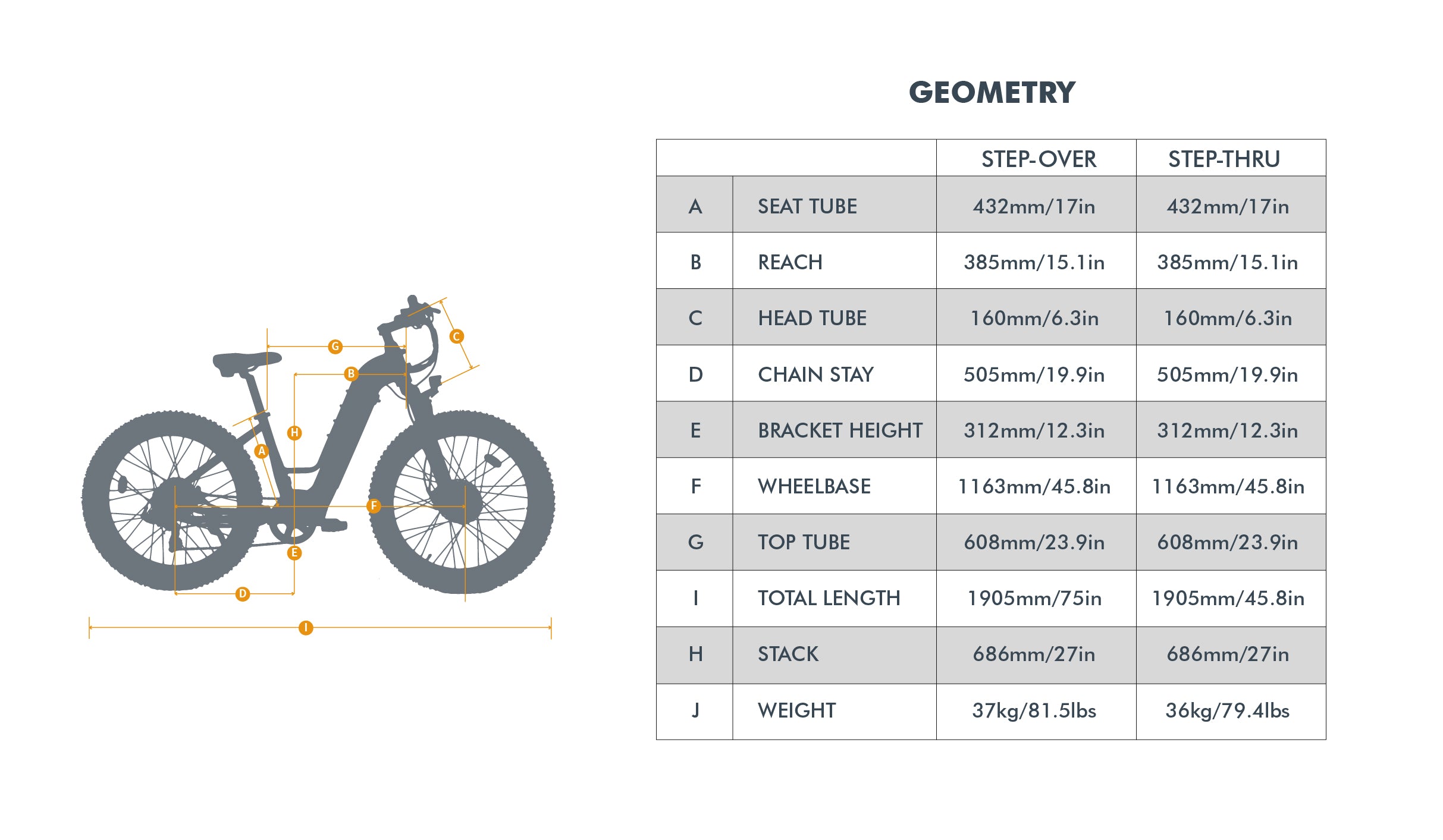
Weight: 81.5 lbs for the FAT-AWD 2.0, 79.4 lbs for the 3.0. No same-frame single-unit sibling exists to isolate the exact delta this adds, so that gap stays [A VERIFIER].
04The lineup at Hunter Bike
Hunter Bike is an authorized Eunorau retailer. These are the three dual-unit models currently listed, each linking to its full spec sheet.


05When one is enough
For a season spent mostly on fire roads or packed trails, one unit covers it: the FAT-HD 1.0 Pro’s 1,000W mid-drive handles moderate grades, and the DEFENDER’s 500W rear unit suits flat-to-rolling ground at $1,599. It’s a terrain call, not a default upgrade — riders who rarely leave hard-packed ground are paying for grip they won’t use.
One legal note: power limits are set state by state, usually around a 20/28 MPH assist cap rather than total wattage, though some states do cap combined output. CalBike’s classification guide (updated Aug. 2024) covers California’s Class 1/2/3 rules as one example; confirm local limits first.
06FAQ: AWD hunting e-bikes
What does AWD mean on an electric bike?
Two independent units, one per wheel, split the torque load. It improves grip on mud, sand and snow; top speed stays at 20 MPH on every model here.
Is a dual-motor setup heavier than a single-motor one?
Usually. The FAT-AWD 2.0 lists at 81.5 lbs; Hunter Bike doesn’t publish a same-frame single-unit version, so any exact delta stays unconfirmed.
Does AWD cost more than a single unit?
Not necessarily. The FAT-AWD 2.0 ($1,699) costs less than the single-unit FAT-HD 1.0 Pro ($1,999) despite similar combined output. Price tracks the build.
How much range do you lose adding a second unit?
Depends on battery allocation. The FAT-AWD line reaches 80 mi only with the optional secondary pack; the stock single-battery figure isn’t published, so it’s unverified.
Is a dual-motor build legal everywhere?
E-bike laws run state by state around a 20/28 MPH cap, and these models stay at 20 MPH like single-unit versions. Some states cap combined wattage — check local rules.
When should a hunter skip AWD?
When most riding stays on fire roads or packed trails rather than mud or snow. The DEFENDER covers that at $1,599 without paying for grip that won’t get used.
- Hunter Bike — published specs for FAT-AWD 2.0, FAT-AWD 3.0, FLASH AWD 1.0, FAT-HD 1.0 Pro and DEFENDER (hunterbike.store, July 2026).
- Micah Toll, “All-wheel drive electric bicycles: double the motors, double the fun!”, Electrek, April 30, 2018.
- Kevin Claxton, “What Is an E-Bike? A Guide to California E-Bike Classifications”, CalBike, updated August 6, 2024.


