
Hunting eBike Range Extender Battery: Added Miles and Fit
A second battery can turn a hunting e-bike that runs out before the ridge into one that covers the whole trip — if the fit is right. This guide covers range extender batteries for electric hunting bikes: what they add, how to match them, and what to check first.
What Is a Hunting eBike Range Extender Battery?
An extender is a second battery that adds capacity without changing the original pack. The bike still runs on its main battery; the extender adds a second power source you switch to, or run in parallel, when the first pack runs low.
The market uses “range extender” for two different systems, and the difference matters for fit:
- Proprietary packs (Bosch PowerMore, Mahle e185) plug into a brand-specific mount. Clean, but locked to one ecosystem.
- Secondary 48V batteries are universal packs that connect through a standard connector or a dual-battery parallel connector — more freedom on capacity and price.
Range extender vs. second battery
Both approaches add range. A proprietary extender is a matched accessory for one motor; a secondary battery is a separate 48V pack you add to the bike. On hunting builds the secondary route wins: it works across models and swaps in the field without touching the motor.
| System | How it connects | Good for |
|---|---|---|
| Proprietary range extender | Brand-specific mount and port | Staying inside one motor ecosystem |
| Secondary 48V battery | Parallel connector or rack position | Hunting builds, swaps in the field, more capacity options |
Two ways to add range: a matched proprietary pack or a secondary 48V battery.
How Much Range Does a Second Battery Actually Add?
Enough to matter — but not double. A second battery adds its full watt-hour capacity, but the extra weight and terrain eat into efficiency, so the real gain is lower than the math on the box.
Capacity is voltage times amp-hours: a 48V, 15Ah battery holds roughly 720 watt-hours of energy on top of your main pack. How far that takes you depends on rider weight, gear, elevation, and motor. Take any “miles added” figure as an estimate, not a spec.
| Battery | Voltage | Capacity | Typical use | Price |
|---|---|---|---|---|
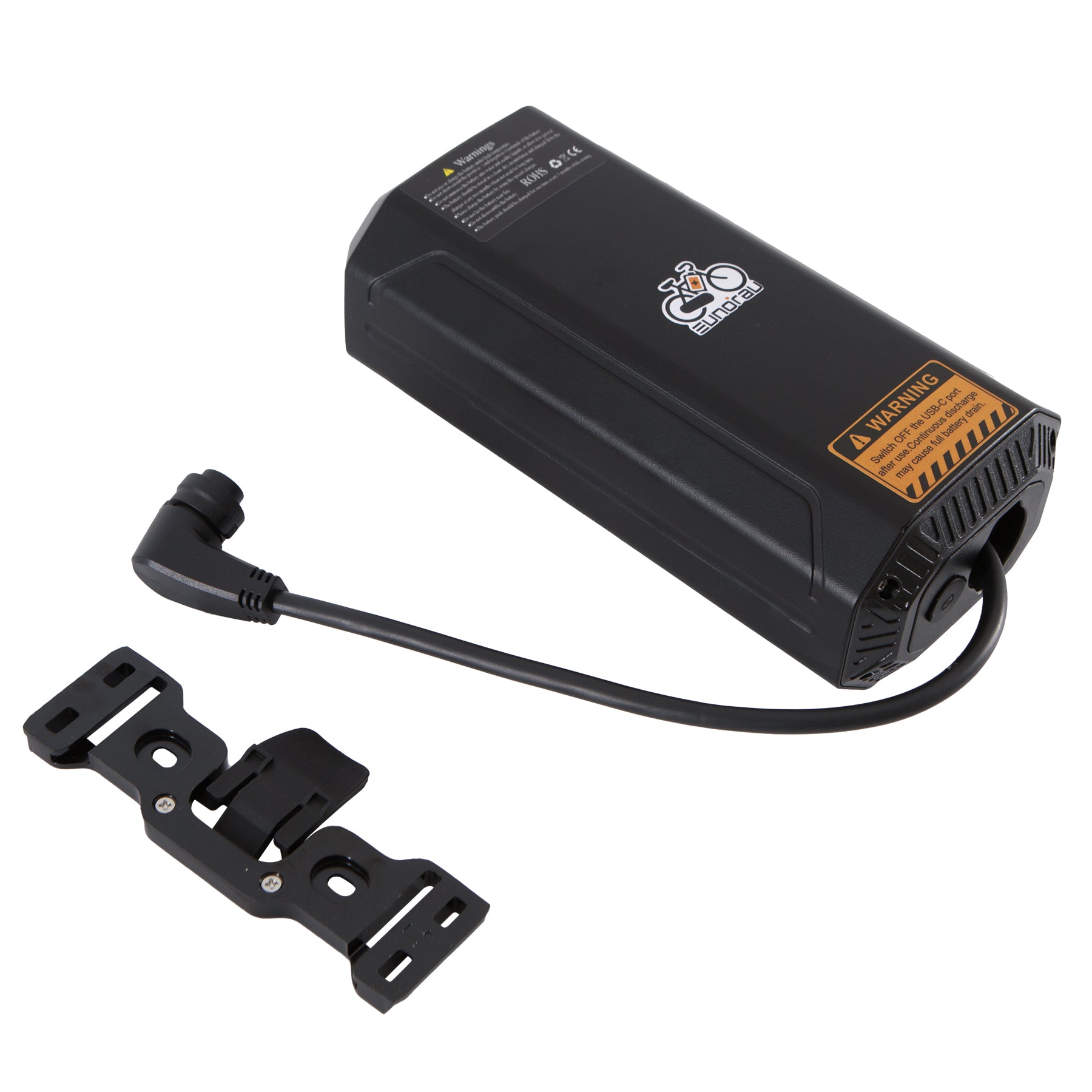
| EUNORAU 48V5Ah Secondary Battery with Type-C port | 48V | 5Ah | Compact backup, charges devices in the field | $219 |
| EUNORAU Universal 48V15Ah Secondary Battery | 48V | 15Ah | Main second pack for extended hunts | $499 |
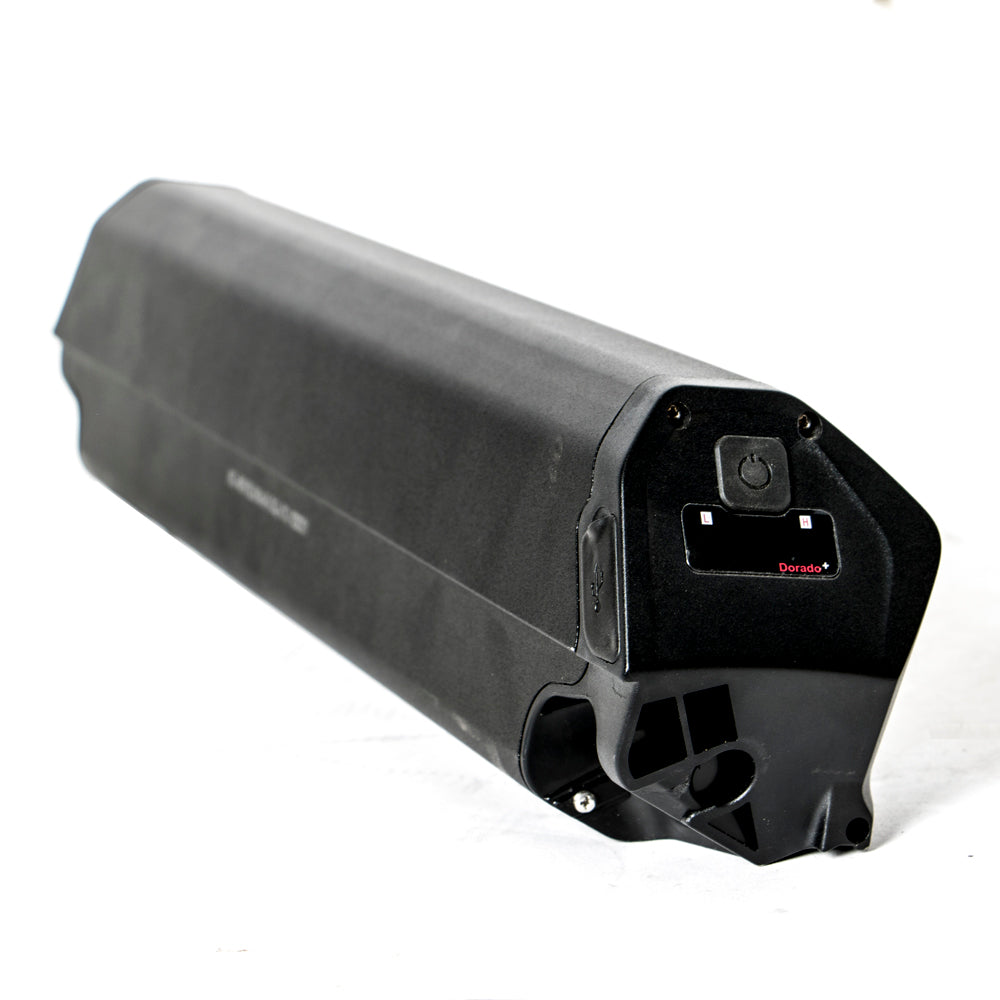
| EUNORAU 48V25Ah Reention Dorado ID-MAX Case Battery | 48V | 25Ah | Large-capacity case pack for long backcountry trips | $699 |
Three 48V secondary packs that offer real capacities and prices, available on Hunter Bike.
Double the capacity does not mean double the miles. The added battery weighs real pounds, and on a loaded hunting bike every pound costs range on climbs. Single-pack riders often expect to ride longer than physics delivers; cold conditions affect range too.
What to Match Before You Buy
Match the voltage, connector, and format before you look at capacity. A 48V pack with the wrong connector will not help you, no matter how many amp-hours it holds.
48V systems and the dual-battery parallel connector
Battery safety matters here. Most electric hunting bikes run 48V pedal-assist systems, and to use both packs you need a dual-battery parallel connector (like the EUNORAU 24V/36V/48V/52V/60V model) that links them so the bike draws from both. That connector turns a spare battery into a real range extender.
Battery formats hunting e-bikes actually use
Format matters as much as voltage. Hunting e-bikes commonly use case-style packs (Reention Dorado ID-MAX) or a dedicated battery base. A battery that physically fits, locks, and matches the connector is one you can actually run. Check your model against the pack format before buying.
- Voltage: same system voltage as your main battery (48V in most hunting builds).
- Connector: compatible with your bike, or use a dual-battery parallel connector.
- Format: case pack (like Reention Dorado) or a battery base that matches your model.
- Locking: the pack must lock under vibration, not just sit in a bag.
Four checks before you buy any range extender.
Weight, Payload, and Placement
A secondary battery adds real weight, so count it against your payload budget. Hunting e-bikes carry a total payload rating, and a heavy hunter plus gear plus an extra battery gets close to the limit fast.
Hunter Bike publishes real payload specs and will not list a bike that maxes out at 200 lb when hunter plus gear is 280. Before adding a second battery, confirm your payload rating and subtract the battery’s weight.
Where the battery rides changes handling. A low, centered frame position balances the weight and suits steep trails; a rack position raises the center of gravity when riding loaded trails. For backcountry work, low and secure is ideal. A pack light enough to carry between camps is a bonus.
How to Install and Switch Batteries in the Field
Install it before the season and practice the swap in field conditions — cold hands, gloves, mud. A range extender is only useful if you can switch to it fast when the main pack is low.
- Set up the mount once: use the battery base or a rack position rated for the pack.
- Wire the parallel connector correctly so the motor draws from both packs.
- Always test the swap at home, with gloves and a loaded bike.
- Plan charging with a smart routine: a fast charger or Type-C port tops you up between hunts. You’re also extending the life of both packs by alternating them.
- Verify voltage and connector compatibility.
- Position the pack on the bike and lock it.
- Connect both batteries through the parallel connector.
- Test the full system before leaving the truck.
Four steps to a reliable dual-battery hunting setup.
Frequently Asked Questions
How much farther can I go with a range extender?
It adds the additional watt-hour capacity of the second pack, minus the efficiency cost of the extra weight and terrain. A 48V, 15Ah secondary battery adds roughly 720Wh on paper; the real gain in miles depends on payload, elevation, and motor settings. Expect a substantial increase, not a doubling, and verify with your own ride data.
Does a range extender battery fit any e-bike?
No. It must match the system voltage, the connector, and the format of your bike. A proprietary pack only fits its own brand’s mount. A secondary 48V battery fits any hunting e-bike running a 48V system when paired with a compatible parallel connector and a position that accepts the pack format, such as Reention Dorado or a battery base.
How do you install a second battery on a hunting e-bike?
You install it on a battery base or a rack position rated for the pack, then connect it to the main battery through a dual-battery parallel connector. Lock the pack, test the swap at home with gloves and a loaded bike, and confirm the connector and voltage match before the season starts.
Is a range extender worth it for hunting?
For backcountry hunts where the truck is miles from the ridge, yes: it’s the difference between covering the ground and turning back early. It is worth less on short, flat trips where the main pack covers the day on one charge. Count the added weight against your payload and verify compatibility before you buy.

Sources
Wikipedia — Electric bicycle (consulted August 11, 2026).
Wikipedia — Lithium-ion battery (consulted August 11, 2026).
Product prices and capacities from Hunter Bike product pages, verified August 11, 2026.


