
All-Terrain Electric Bike for Hunting: What to Check
Buyer’s guide · backcountry access
Rough ground does not make every electric bike an all-terrain choice. The useful decision starts with the loaded system: the rider, equipment, route, and the published specifications of the bike.
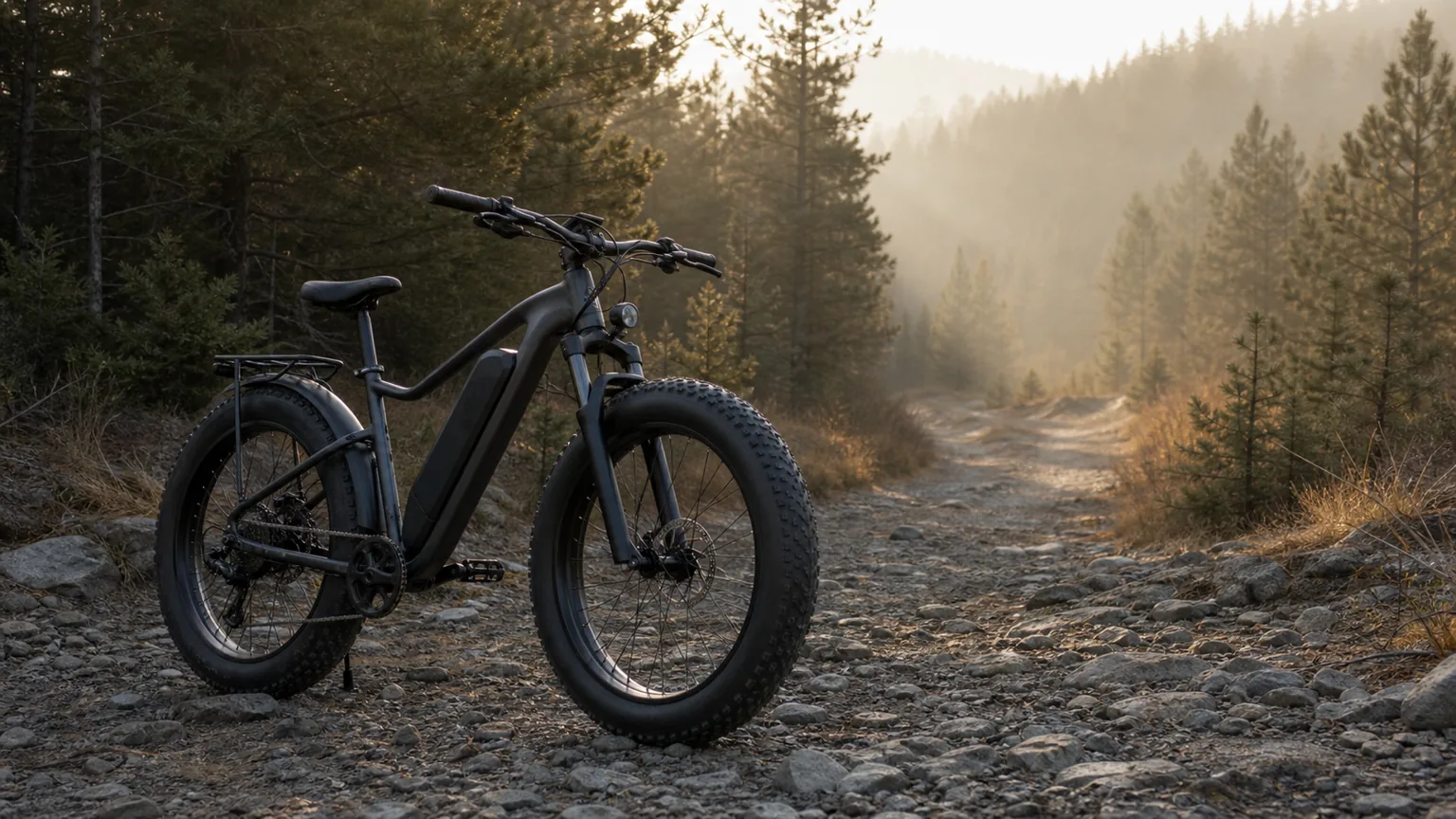
What “all-terrain” should mean before you shop
All-terrain is a fit between the route, the loaded bike, and the rider—not a label on its own. A forest access road, loose soil, broken rock, wet ground, and a steep climb do not load a bike in the same way. Start by describing the surface, grade, distance, and what must travel with you.
That description gives product-page specifications a job. Tires affect contact with the surface. A suspension fork affects how the front of the bike responds to uneven ground. The frame, brakes, and rear cargo arrangement need to work with the total weight. Motor power, torque, drivetrain, pedal assist, and throttle behavior need to be evaluated in the context of the route, not in isolation.
| Route signal | Specification to inspect | Why it belongs in the decision |
|---|---|---|
| Loose or uneven terrain | Tire type and size; suspension fork | These are the published setup details that describe how the bike contacts and manages the ground. |
| Long climbs or repeated starts | Motor architecture, torque listing, drivetrain, pedal-assist modes | Compare the manufacturer’s published details rather than assuming a watt figure tells the whole story. |
| Rider plus equipment | Published total-load limit, rear rack rating, brakes | The system must be rated for the actual load, not only the bike’s unloaded weight. |
| Long route away from charging | Battery information and stated range conditions | Battery planning needs to account for terrain, payload, and assist use. |
Write down the loaded weight and the route before comparing a motor or a range claim. That order prevents a capable-looking setup from being evaluated against the wrong use case.
All-terrain electric bike for hunting: build the loaded system
Check capacity, rolling setup, powertrain, braking, and battery planning together. A bike can have fat tires and still be a poor fit if its published capacity does not cover the rider and equipment. It can have a powerful motor and still require a different battery plan for a long, steep route.
Hunter Bike describes its catalog screen around real hunting payload specifications, real-world range data, motor torque, sound profile, and carrying capacity. Its site grounding gives a simple capacity screen: it does not list a bike capped at 200 lb when rider and equipment total 280 lb. Use that as a prompt to verify the published limit for each candidate; it is not a universal rating for every electric bike.
- Add rider, clothing, equipment, and intended cargo; compare that total with the manufacturer’s published limit.
- Match fat tires, tire pressure guidance, and suspension components to the surface you actually expect.
- Read the motor, drivetrain, pedal-assist, and throttle information as a system for hills and slow sections.
- Confirm brake type and the manufacturer’s stated use conditions for the loaded setup.
- Read battery capacity and range conditions, then plan the route with room for terrain and load changes.
This is also where a pre-purchase conversation helps. Hunter Bike offers pre-purchase consultation, and the useful questions are concrete: What is the route? What is the total load? What surface is expected? Which published model specifications meet those conditions?
Match tires, suspension, and frame to the route
Fat tires and suspension should be matched to the surface and control needs, while frame fit and load remain part of the same decision. “Fat tire” is not a substitute for reading a product’s tire, wheel, and suspension specifications. A rear rack or accessories can change how a loaded bike handles, so look for the limits that apply to the complete arrangement.
For a route that changes from hardpack to loose ground, make a comparison sheet with the exact published tire dimensions, suspension configuration, frame geometry, components, and brake system. An available page may list a class, throttle mode, mph figure, or off-road label. Those labels do not provide a full answer. Consider two questions: does the setup handle the rider, gear, and route, and is it built for the ground and trails? A smooth feel or a great review is not a specification. If the product detail is absent, do not infer it from a photo. Ask the seller or manufacturer before you ride miles from the access point without a confirmed plan.
Battery range and power: avoid headline-only decisions
A published range figure is not a route plan because ground, payload, assist setting, and battery condition can change energy use. Use the manufacturer’s stated test basis as the starting point, then plan conservatively for the way you intend to ride. Do not turn an advertised number into a promise for a different load or route.
Power and motor type belong in the same review. A hub motor and a mid-drive motor are different architectures; compare the actual manufacturer information for the specific product rather than assigning a blanket result to either. The same goes for torque, speed, throttle operation, and pedal assist. Local rules may classify pedal-assist and throttle operation differently, so the product specification and access rules both matter.
- Save the product’s battery and range documentation with its stated test basis.
- Map the outbound and return route; do not plan only the first half.
- Factor in elevation, surface, load, stops, and assist use.
- Use the product manufacturer’s charging and battery instructions. For official e-bike access information on National Park Service lands, consult the National Park Service e-bike guidance.
Before you ride: verify product specs and local access rules
Confirm the product’s published specifications and check the public land manager or wildlife agency that governs the route before riding. Access requirements can vary by location, route, vehicle classification, and current local direction. A category page or a general article cannot substitute for the rule that applies to the specific place.
Use the official land-management source for the route, then check the relevant state wildlife agency where applicable. The Bureau of Land Management recreation page is a starting point for BLM-managed recreation information; it is not a statement that every route is open or that a particular bike is permitted. Recheck before the trip because local notices can change.
Compare current Hunter Bike electric bikes after the checklist
Once the required specifications are identified, compare current inventory against the same checklist rather than against a generic all-terrain label. Hunter Bike’s hunting and fat-tire catalog is screened for build quality, performance, and warranty support. Product availability and specifications can change, so use the current listing and manufacturer information for the final comparison.
Frequently asked questions
What matters most when choosing an all-terrain e-bike for a hunting route?
The first filter is the published total-load limit for the rider, equipment, and intended cargo. Then compare tire setup, suspension, motor and pedal-assist details, brakes, and battery information against the actual route. Do not rely on a category name or an unloaded range claim.
How should I plan battery range for rough ground?
Start with the manufacturer’s published battery and range information, including the conditions under which it was stated. Plan conservatively for the complete out-and-back route because ground, grade, load, stops, and assist use can change energy consumption. Follow the manufacturer’s battery guidance.
Can I use an electric bike on a public hunting route?
Rules can vary by land manager, route, local designation, and the bike’s classification or operation. Check the official manager of the exact route and the relevant state wildlife agency before riding. A general guide is not legal permission for a particular location.
- Hunter Bike site grounding and current electric-bikes collection, consulted July 31, 2026.
- National Park Service — E-Bikes, consulted July 31, 2026.
- Bureau of Land Management — Recreation, consulted July 31, 2026.


