
Mid Drive Hunting Ebike: What to Check Before Buying
Buying guide · Electric bikes
A crank-area motor setup can be worth considering when an access route changes grade or surface. The label alone does not establish range, carrying capacity, route access, or fit. Those answers come from the complete bike, its published specifications, and the route you plan to use.
Direct answer
A mid drive hunting ebike can suit routes that require controlled climbing and frequent gear changes because the motor works through the bicycle drivetrain. That architecture is only one part of a purchase decision. Check the actual bike’s published drivetrain, battery configuration, manufacturer load rating, warranty, and the current rules for the route.
What is a crank-area motor system on a hunting e-bike?
This system places the motor around the crank area and sends assistance through the chain and gears. A hub motor is mounted at a wheel instead. That distinction matters because gear selection becomes part of how the system is used.
The useful question is not whether one label sounds stronger. It is whether the complete drivetrain gives you a clear, maintainable way to handle the route you actually ride. Read the manufacturer’s component list. Confirm what is included. Then compare that evidence with the grades, surface changes, and stopping points on your normal access route.
Takeaway
Motor location explains the system layout. It does not prove capability for a particular rider, load, or route.
When does a mid drive hunting ebike make sense?
A mid drive hunting ebike is worth a closer look when your route includes changing grades, loose surfaces, or repeated low-speed starts. In those conditions, a rider who is comfortable selecting gears may value the way a crank-area motor works through the drivetrain.
Steep or changing grades
On a route that changes often, inspect the bike’s published gearing and shifting components rather than relying on a motor headline. The relevant question is whether you can select a suitable gear before a climb or restart.
Loose or uneven surfaces
Surface conditions change the decision. Tire choice, rider technique, weather, and the complete bicycle matter alongside motor architecture. A product page should provide the specifications needed to evaluate the complete setup; if it does not, pause the comparison.
Riders willing to manage gears
This architecture does not remove the need to shift thoughtfully. If you want a simple buying rule, write down your route constraints first and use those constraints to test each verified product specification.
| Route condition | What to inspect | Question to resolve |
|---|---|---|
| Changing grades | Published drivetrain and gear details | Can the system be operated appropriately before a climb? |
| Loose or uneven surface | Complete bike setup and manufacturer guidance | Which components are actually supplied on this bike? |
| Frequent stops | Controls and documented operating instructions | What is the recommended approach for restarting under the intended conditions? |
This table is a buying framework, not a performance rating or a substitute for the manufacturer’s instructions.
What the motor-location label does not tell you
“Mid-drive” is an architecture, not a shortcut to the other facts a high-ticket buyer needs. It does not establish range, carrying capacity, sound level, weather resistance, reliability, route permission, or suitability for any particular use.
Verify on the real product page
- The complete motor and drivetrain specification
- The battery configuration supplied with that exact bike
- The manufacturer’s published load rating
- The warranty terms and any assembly or maintenance requirements
- The components included in the listed configuration
- The current rules governing the route you intend to use
The practical move is simple: if a number or capability is not documented for the exact product, do not infer it from the motor-location label.
How should you compare this e-bike architecture before buying?
Compare verified product pages against your route requirements, not against a generic claim. Start with the access route, then create a short evidence list for each bike you are considering.
- Describe the route: grade changes, surface, distance, weather exposure, and places where you may need to stop.
- List your complete carried equipment without guessing a product capacity.
- Open the manufacturer documentation for each exact configuration.
- Record only published facts: drivetrain, battery configuration, manufacturer rating, warranty, and included components.
- Remove any option whose documentation does not answer your non-negotiable questions.
For a catalogue starting point, you can review Hunter Bike’s electric-bike collection, then verify each product page before treating any specification as part of your decision.
Takeaway
A comparison becomes useful when every row can be traced to the exact product page or manufacturer documentation.
Which components change the decision beyond the motor?
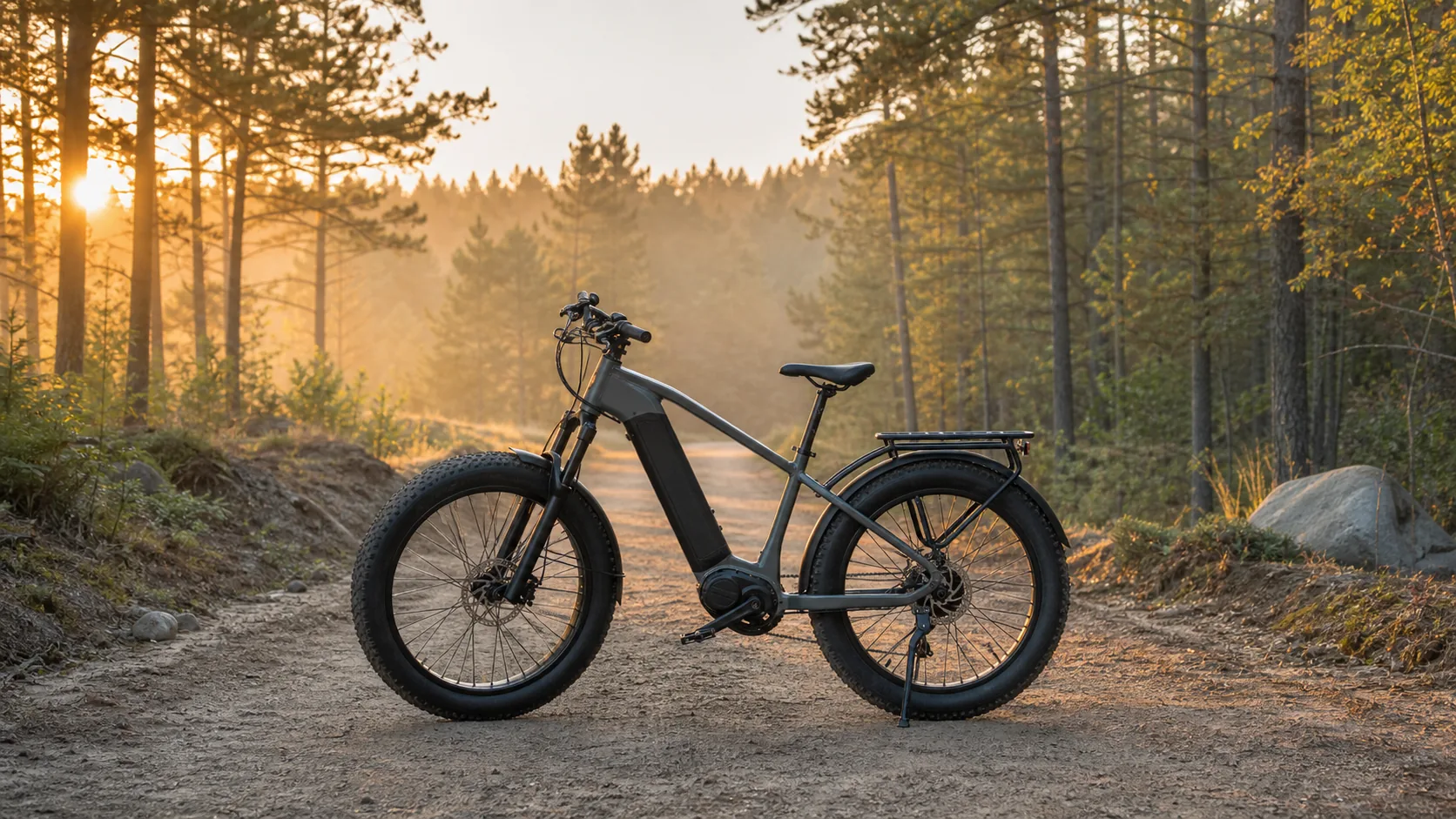
The motor is only one system on an electric bike. The frame, front suspension, tires, rear rack, battery, controls, and braking setup all influence whether a particular configuration matches the route. None should be assumed from a photo or a category label.
Start at the contact points. Tires influence the surface a rider can reasonably consider; the front suspension, if supplied, changes the components you need to inspect for service and setup; and the rear area may include a rack or equipment mounting point on some models. Those are product-specific features, not standard promises across all models.
Next, separate power language from usable information. “Powerful” is an adjective, not a specification. Torque, motor controls, pedal assist behavior, and the selected gear are the details to read in the documentation. A product page can also identify whether hydraulic braking is present; do not assume it is. The same rule applies to accessories, a rear carrying arrangement, fat tires, and a full battery setup.
| Part of the bike | Why it belongs in the review | What to verify |
|---|---|---|
| Frame and front end | The frame and front components shape fit and service needs. | Published frame information, front suspension details when included, and the intended setup. |
| Tires and traction | Tires affect how a bike interacts with changing terrain. | Tire type, size, pressure guidance, and the manufacturer’s intended surface use. |
| Rear rack or cargo points | A rack may change what a rider can carry, but capacity is product-specific. | The exact manufacturer load rating and the included rack or cargo hardware. |
| Controls and brakes | Controls shape how a rider manages assist and speed. | Assist modes, control layout, and whether the exact bike lists hydraulic components. |
Takeaway
Use documented components to judge the complete bike. A motor label cannot stand in for the frame, tires, suspension, rack, battery, or brake specification.
How should distance and carried weight affect the shortlist?
Range is not a universal number that can be copied from one rider to another. Battery configuration, terrain, temperature, rider input, speed, tire setup, and carried weight can change the result. If your route is described in miles, record the full out-and-back distance and every point where the route changes surface or grade.
Then record what you plan to carry without turning a guess into a capacity claim. Clothing, water, tools, and legal accessories add weight. A large amount of carried equipment can also change handling. Only the exact product documentation can tell you what the manufacturer permits for its frame, rear rack, carrying system, or trailer connection.
This is also the point to be honest about terrain. A short, smooth trail and a long off-road access route are not the same task. Mountain access, wet ground, loose material, and repeated stops are reasons to slow the comparison down, read the manual, and ask the seller for the missing document instead of filling the gap with marketing language.
Route worksheet
- Write the complete distance in miles, including the return route.
- Describe the terrain: smooth, loose, steep, or changing.
- List all carried weight and any attached accessories.
- Check the current weather and trail notices.
- Match every requirement to a published product feature or manufacturer document.
Takeaway
Distance, terrain, rider input, and carried weight are part of the decision. They should lead the shortlist before any claim about performance.
How do you read a product page without filling gaps?
Read the product page as a record of what is included, not as a story about what every rider will experience. Manufacturers can list the motor, battery, frame, tires, suspension, brake system, rear rack, and accessories. That makes a comparison repeatable; it does not turn a listed feature into an unsupported result.
For example, torque is a specification only when the exact product documentation provides it. The word does not tell you how a specific rider will handle every trail. The same holds for motor power, assist settings, pedal response, and claims about speed. Two motors can use similar marketing language while the rest of the bike, its setup, and the rider’s route differ.
Use the product page to make a question list. Does the manufacturer identify the battery and its configuration? Does it identify the tire and front suspension supplied on this model? Are hydraulic brakes listed, or is that information absent? Is a rear rack included, and is its permitted use documented? Those questions help hunters avoid buying from an assumption.
It is fine to reject a comparison when the evidence is thin. A great buying decision is not the one with the most jargon. It is the one where the route, the rider, the equipment, and the documented bike features line up. If a route involves mountain access, a long series of trails, or a heavy equipment list, ask for the missing document before committing.
Rules matter separately. A hunting season, a game-management area, and a route manager can each impose conditions that a product page cannot settle. Check the current agency source for the exact location. The bike can be technically configured for off-road use and still be unsuitable for a particular access plan if the current rule does not allow it.
Takeaway
Keep “listed feature,” “manufacturer specification,” “rider recommendation,” and “current route rule” as separate columns. That separation lets you compare bikes without inventing a conclusion.
Where can you use an e-bike for access?
Route access is determined by the jurisdiction, land manager, route classification, current notices, and applicable hunting rules. A motor’s position does not answer that question. Verify the exact route before you depend on an e-bike for access.
For land managed by the U.S. Bureau of Land Management, start with the agency’s published e-bike guidance and then check the local office or current route information. Other public and private lands can follow different rules.
Route-check sequence
Identify the jurisdiction, identify the land manager, read the current route rules, then confirm that the specific bike’s classification matches what those rules allow.
Mid-drive hunting ebike FAQ
What makes a crank-area motor different from a hub motor?
A crank-area motor sends assistance through the bicycle drivetrain, while a hub motor is mounted at a wheel. This difference changes how gearing relates to assisted riding, but neither label alone establishes range, capacity, route access, or complete-bike suitability.
Is this architecture useful on steep or uneven routes?
It can be relevant when a route involves changing grades, low-speed starts, and gear selection. The complete answer depends on the documented drivetrain, tire setup, rider, carried load, conditions, and the manufacturer’s instructions for the exact bike. Review those facts before deciding.
What should I verify before buying an e-bike with this motor layout?
Verify the published drivetrain, battery configuration, manufacturer load rating, warranty, included components, and the current rules for the exact route. If a product page does not document a needed fact, do not fill the gap with an assumption based on motor placement.
Sources
- Wikipedia: Electric bicycle — general terminology for electric-bicycle systems.
- U.S. Bureau of Land Management: E-bikes — starting point for BLM-managed-land guidance; local rules still require confirmation.
Updated July 26, 2026.


